


Rib Knit vs Jersey for Fitted Long-Sleeve Tops: A Practical Fabric Comparison
A well-designed fitted long-sleeve top should follow the body's contours without feeling restrictive, maintain its shape through movement, and feel comfortable against the skin. Achieving this balance starts with choosing the right knitted fabric.
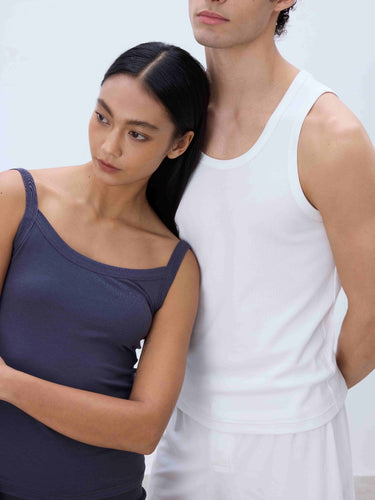
Rib knit and single jersey are two popular choices for fitted tops, but they create noticeably different results. Rib knit offers distinctive vertical texture and natural stretch, while jersey provides a smoother surface and often a more fluid drape.
For apparel brands and designers, understanding these differences can help determine which construction best supports the intended fit, appearance, and wearing experience.
What Makes Rib Knit and Jersey Different?
Both rib knit and jersey belong to the family of weft-knitted fabrics, but their loop arrangements create different characteristics.
Rib knit features alternating columns of knit and purl stitches, forming vertical ridges across the fabric. Common variations include 1×1 rib and 2×2 rib. These structures allow the fabric to extend easily across its width and contract toward its original dimensions, making rib particularly suitable for garments designed to follow the body.
A fine 1×1 rib can create a subtle, refined texture, while a more pronounced 2×2 rib adds visual depth and a stronger sense of structure.
Single jersey, by contrast, has a relatively smooth knit face and a different, more textured reverse side. Its clean surface makes it a popular choice for T-shirts, lightweight tops, and everyday essentials.
Jersey can also offer substantial stretch, particularly when blended with elastane. However, its appearance remains smoother and less visibly textured than rib knit.
Stretch and Recovery: Which Is Better for a Close Fit?
Stretch is one of the most important considerations when developing fitted long-sleeve tops.
Rib knit generally provides greater crosswise extensibility because its vertical ribs can open and contract as the fabric stretches. This allows rib garments to accommodate body movement while maintaining a naturally close-fitting appearance.
This characteristic is particularly valuable for slim-fit tops, fitted sleeves, and body-hugging layering pieces.
However, stretch and recovery are not the same. Although rib construction provides natural mechanical stretch, its ability to return to its original dimensions depends on yarn properties, stitch density, fiber composition, and finishing.
Jersey typically has less inherent crosswise extensibility than comparable rib constructions, but adding elastane can significantly improve both stretch and recovery.
For example, a lightweight TENCEL™ Lyocell jersey blended with elastane can offer a smooth, flexible fit, while a TENCEL™ Lyocell and Merino wool rib can combine soft texture with comfortable mechanical stretch.
The key distinction is that construction influences stretch, while fiber selection and elastane content also play important roles in recovery.
Hand Feel, Texture, and Drape
Beyond stretch, the choice between rib and jersey influences how a finished garment looks and feels.
Rib Knit: Textured and Body-Following
Rib knit introduces visible vertical lines that create a sense of texture and definition.
Depending on the yarn and finishing, the surface can feel soft, plush, or relatively smooth. Fine-gauge ribs made with Lyocell, Modal, or fine Merino wool blends are particularly interesting for premium next-to-skin garments.
The vertical texture also creates a subtle visual effect that complements fitted silhouettes. Rather than appearing completely flat, the fabric adds depth to simple long-sleeve designs.
Jersey: Smooth and Fluid
Jersey is often preferred when designers want a cleaner, more understated surface.
Lightweight jersey made with Lyocell or Modal can offer a soft touch and fluid drape, making it attractive for minimalist tops and comfortable layering pieces.
Cotton jersey can provide a more familiar, casual T-shirt feel, while fine wool blends can introduce a refined touch and comfortable warmth.
Fabric weight, yarn selection, and finishing all influence the final drape. A substantial jersey may hold more shape than a lightweight rib, so construction alone does not determine how structured a garment will appear.
Rib Knit vs Jersey: Side-by-Side Comparison
| Characteristic | Rib Knit | Single Jersey |
|---|---|---|
| Surface Appearance | Distinctive vertical ridges | Smooth face, textured reverse |
| Natural Stretch | Typically greater crosswise stretch | Generally less, depending on construction |
| Stretch Recovery | Depends on fibers, elastane, and finishing | Can be enhanced with elastane |
| Drape | Textured and body-following | Often smoother and more fluid |
| Fit | Naturally suited to close-fitting styles | Suitable for fitted or relaxed styles |
| Edge Curling | Generally less prone to curling | More prone to curling at cut edges |
| Design Applications | Fitted tops, base layers, textured essentials | Smooth fitted tops, T-shirts, lightweight layers |
Neither construction has a universally fixed GSM range. Both can be engineered in different weights depending on yarn count, knitting gauge, stitch density, and intended application.
When Should Designers Choose Rib Knit?
Rib knit is particularly suitable when the design calls for visible texture and comfortable body-hugging stretch.
Consider rib knit for:
- Slim-fit long-sleeve tops: The rib structure helps the fabric follow the body's contours while allowing movement.
- Premium layering pieces: Fine ribs made with Lyocell, Modal, or wool blends can create a soft, tactile surface.
- Fitted basics with visual interest: Vertical rib patterns add subtle texture without requiring prints or decorative details.
- High-stretch silhouettes: Rib constructions combined with elastane can provide the extensibility and recovery needed for close-fitting garments.
For designers developing premium everyday essentials, rib knit offers an opportunity to make fabric texture part of the garment's identity.
When Is Jersey the Better Choice?
Jersey is an excellent option when the intended aesthetic emphasizes smoothness, softness, and clean lines.
Consider jersey for:
- Minimalist fitted tops: A smooth face creates an understated appearance with fewer visible surface details.
- Lightweight layering: Fine jersey can provide comfortable coverage without excessive bulk.
- Soft, draped silhouettes: Lyocell- and Modal-rich jerseys can create fluid movement and a gentle next-to-skin feel.
- Stretch fitted basics: Jersey blended with elastane can deliver comfortable stretch and shape recovery while retaining a sleek surface.
Jersey is also highly versatile across different weights and fiber blends, making it suitable for both everyday T-shirts and more refined fitted garments.
Practical Considerations for Fabric Development
Choosing between rib and jersey involves more than comparing swatches by touch.
For production teams, several details deserve attention.
Cutting and sewing: Single jersey is more prone to curling at cut edges, which may require additional control during handling and sewing. Rib knit generally curls less, but its greater extensibility requires careful tension management to avoid stretching or distortion during assembly.
Dimensional stability: Both constructions should be evaluated for shrinkage and shape changes after laundering. Fiber composition, knitting conditions, and finishing can significantly affect the results.
Stretch recovery: Test samples in the directions relevant to the garment's fit. Repeated stretching and recovery assessments are especially useful for fitted sleeves, elbows, and waist areas.
Opacity and coverage: For close-fitting tops, fabric appearance should also be evaluated under stretch, particularly with lighter colors and lightweight constructions.
Comparing finished garment samples, rather than relying on fabric specifications alone, provides a clearer understanding of how each construction will perform.
Final Thoughts: Choosing the Right Fabric for Your Collection
Rib knit and jersey each bring distinct advantages to fitted long-sleeve tops.
Rib knit stands out for its natural crosswise stretch, vertical texture, and body-following fit. It is an excellent choice for fitted basics where tactile richness and visible fabric structure contribute to the design.
Jersey excels in smoothness, versatility, and fluid drape. With the right fiber blend and elastane content, it can deliver an equally comfortable fitted silhouette with a cleaner, more minimalist appearance.
Ultimately, the best choice depends on the garment's intended fit, surface aesthetic, seasonal weight, and performance requirements.
For apparel brands developing premium basics, exploring both constructions in TENCEL™ Lyocell, Merino wool, Modal, and other soft fiber blends opens up opportunities to create distinctive garments from familiar silhouettes.
FAQ
Which fabric offers better shape retention for fitted long-sleeve tops worn daily?
Rib knit offers superior shape retention due to its high two-way stretch recovery and vertical structural stability—making it ideal for core wardrobe pieces that must maintain clean lines at cuffs, hems, and sleeves after repeated wear and washing.
Is jersey suitable for fitted long-sleeve tops intended for layering under blazers or coats?
Jersey can work for layering, but its smooth, low-resistance surface may slip under structured outerwear; rib knit is often preferred in this context for its subtle grip and resistance to torqueing or hem lifting during movement.
How does fiber composition affect recovery in jersey versus rib knit?
While both fabrics benefit from elastane or TENCEL™ blends, rib knit’s inherent loop structure gives it stronger natural recovery—even without added spandex. Jersey relies more heavily on fiber engineering (e.g., TENCEL™/elastane blends) to compensate for its lower innate resilience, especially in low-GSM versions.
Which fabric is more forgiving during cut-and-sew production for fitted long-sleeve styles?
Jersey is generally more production-friendly: it cuts cleanly, feeds smoothly through machines, and exhibits less curling or tension sensitivity than rib knit—though rib’s stability can reduce fitting adjustments downstream if handled by experienced operators.
Can I achieve a premium, tactile hand feel with jersey, or is rib knit the only option for rich texture?
Both can deliver premium hand feel—but differently. Brushed or fine-gauge jerseys with TENCEL™ or organic cotton offer luxurious softness and fluid drape, while rib knit provides distinctive textural depth and substance—ideal when surface interest, structure, and sensory contrast are design priorities.
Related Blogs
Add a short description for your brand news

Nylon vs Polyester for Stretch Knit Fabrics: Which Performs Better in Modern Knitwear?

Knit Structures Used in Athleisure Fabrics: A Guide for Performance & Fabric Development

Cotton vs Polyester in Knit Fabrics: Comfort or Structure for Urban Commuterwear?