
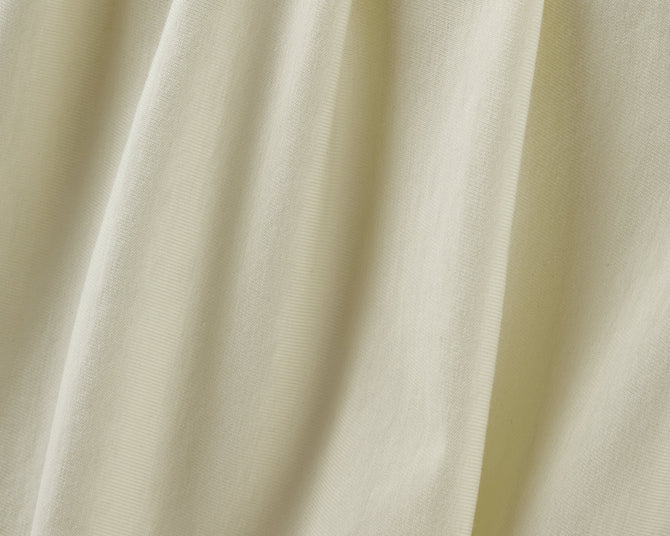





What Is SCUBA Fabric?
SCUBA fabric is a double-faced air-layer knit engineered with a spacer structure between two fabric surfaces, creating volume, resilience, and a clean, structured drape without excessive weight.
Unlike ordinary double knits, SCUBA fabrics are defined by their internal air space, which enhances recovery, insulation, and shape retention while maintaining comfort for everyday wear.

Why Choose SCUBA Fabric?
Air-Layer Volume Without Bulk
The internal air layer creates natural loft and elasticity, offering a cushioned feel and dimensional stability without heaviness.
Clean Structure & Shape Retention
SCUBA knits hold silhouettes beautifully—ideal for garments that require structure, such as hoodies, jackets, and sculpted tops.
Comfortable Stretch & Recovery
Depending on construction, SCUBA fabrics can achieve mechanical springiness or elastane-assisted stretch, balancing comfort and control.
Minimal Snagging & Refined Surface
Optimized sandwich structures significantly reduce loose threads and surface snags, elevating durability and perceived quality.

SCUBA Fabric Construction & Technology
Jelly Air-Layer Concept
A naturally springy air-layer structure that delivers elasticity without relying solely on elastane, resulting in a clean, cotton-like hand feel.
Five-Layer “Sandwich” Construction
Multiple interlocked layers enhance breathability, loft, and structural integrity while maintaining a crisp drape.
Spacer Engineering for Controlled Stretch
By adjusting yarn tension and spacer density, SCUBA fabrics achieve different levels of rebound and support—tailored to use scenarios.

Our SCUBA Fabric Collection
Our SCUBA fabrics are available in different constructions and material balances to support diverse design and performance needs.
By Structure
- Air-layer double knit
- Five-layer spacer sandwich knit
- Elastane-supported spacer knit
By Material Direction
- Cotton-forward SCUBA for clean, everyday aesthetics
- Cotton–elastane blends for enhanced flexibility
- Compact combed cotton constructions for refined surfaces
By Wearing Scenario
- Athleisure & active-inspired styles
- Urban casual & streetwear silhouettes
- Gender-neutral, season-spanning garments
Representative SCUBA Fabrics


Care & Wear Stability
SCUBA fabrics are engineered for long-term dimensional stability and surface durability.
Proper care helps preserve air-layer integrity, recovery, and appearance over repeated wear.
- Designed to resist deformation and collapse
- Maintains structure after regular washing
- Suitable for frequent, everyday use
SCUBA Fabric FAQ
What is SCUBA fabric?
SCUBA fabric is an air-layer knit with a spacer structure that creates volume, resilience, and a clean, structured drape.
How is SCUBA different from regular double knit?
SCUBA fabrics feature a defined internal air space, offering better recovery, insulation, and shape retention.
Is SCUBA fabric stretchy?
Stretch depends on construction—some rely on mechanical elasticity, while others incorporate elastane for enhanced flexibility.
Is SCUBA fabric breathable?
Yes. The air-layer structure promotes airflow while maintaining warmth and comfort.
What garments work best with SCUBA fabric?
Hoodies, jackets, structured tops, athleisure pieces, and modern casualwear.
Does SCUBA fabric hold its shape over time?
Latest News
Join the Journey: Regentech Updates 8 Fabric Trends Unlocked

W27/28 Knit Fabric Directions: Shape, Drape and Surface
A boxy top, a fluid long-sleeve layer and a textured pullover can give an autumn/winter collection three distinct material expressions. For brands developing AW27/28 collections, each offers a different way...

Modal vs Lyocell: How to Choose for Knit Fabric Development
Compare Modal and Lyocell for knit fabric development, from fiber production and hand feel to wet strength, fibrillation, knit construction and end-use. Explore practical fabric routes including Modal Cashmere, Lyocell...

Yarn count, knitting gauge and GSM: what each number tells you
A practical explanation of yarn count, knitting gauge and GSM for fabric development and sourcing teams. Covers count systems, machine needle spacing and finished fabric weight, with examples showing how...

Why Millennials and Gen Z Are Loving Cashmere Blends
An analysis of the shifting consumer demand among Millennials and Gen Z toward circular knit cashmere blends, evaluating performance metrics, product applications, and sustainable sourcing.