



“Next-to-skin” knitwear places the highest demands on fabric performance. This article explains what truly defines next-to-skin fabrics, why TENCEL™ × Wool performs better than traditional Wool, and how brands use it across T-shirts, long sleeves, and lounge styles.
What Does “Next-to-Skin” Really Mean in Knitwear?
“Next-to-skin” fabrics must maintain comfort, softness, and stability under direct, prolonged contact with the body.
In technical terms, next-to-skin knitwear requires:
-
Low surface irritation
-
Stable moisture behavior
-
Controlled thermal response
-
Reliable recovery during movement
Unlike outer layers, these garments leave no margin for error. Any imbalance in fiber selection, structure, or finishing becomes immediately noticeable to the wearer.
Why Is Next-to-Skin Knitwear Technically More Demanding Than Base Layers?
Next-to-skin garments are worn longer, closer, and under more dynamic conditions than most base layers.
While base layers are often designed for short-term or performance-specific use, next-to-skin knitwear must perform consistently across daily wear, repeated washing, and extended skin contact.
Key challenges include:
-
Heat and moisture buildup
-
Friction at high-movement zones
-
Sensitivity to fiber roughness
-
Shape deformation over time
This is where traditional wool fabrics often fall short without careful engineering.
How Does Lyocell Reduce Wool’s Skin Irritation in Blended Fabrics?
Lyocell reduces wool irritation by smoothing the fabric surface and moderating moisture exchange at the skin interface.
In TENCEL™ × Wool fabrics, Lyocell fibers:
-
Create a smoother yarn surface around wool fibers
-
Absorb and redistribute moisture more evenly
-
Reduce friction between cloth and skin
This interaction minimizes the “prickle” sensation commonly associated with Wool, even when fine Merino fibers are used.
Why Does Knit Structure Matter as Much as Fiber Choice for Skin Comfort?
Knit structure determines how fibers interact with the skin during movement, often influencing comfort more than fiber composition alone.
Even with the same TENCEL™ × Wool blend, different structures can produce very different sensations:
-
Jersey knits offer smooth surface contact and fluid drape
-
Rib structures enhance elasticity but increase surface interaction
-
Double knits provide stability but may feel denser against the skin
For next-to-skin garments, structure must be selected to balance stretch, recovery, and surface smoothness—especially in high-contact areas.
Which TENCEL™ × Wool Knitwear Categories Benefit Most From Next-to-Skin Performance?
TENCEL™ × Wool fabrics are increasingly used beyond base layers in everyday knitwear categories.
T-shirts
Lightweight TENCEL™ × Wool knits provide softness, breathability, and odor resistance, making them suitable for refined daily T-shirts worn directly on the skin.
Long-sleeve Tops
For long sleeves, balanced blends offer thermal adaptability without overheating, supporting all-day wear across seasons.
Loungewear
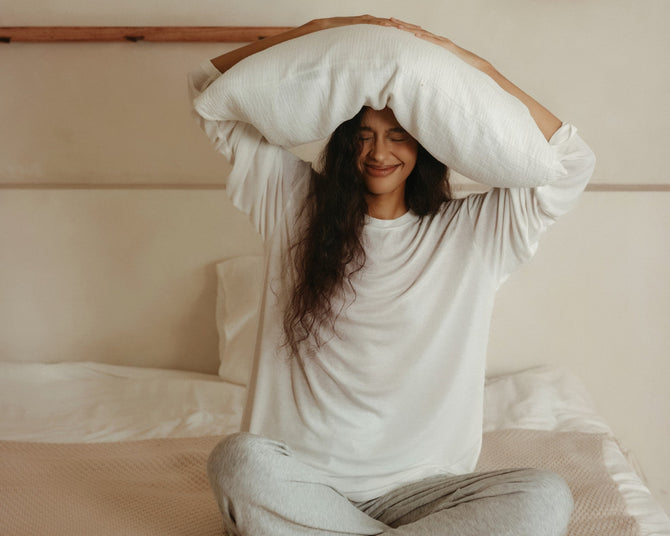
In loungewear and home wear, next-to-skin comfort is critical. TENCEL™ × Wool fabrics combine relaxation, temperature control, and shape stability for extended wear.
Fabric references (examples):
Styles such as 6370, 6371, and 6385 are commonly selected for next-to-skin knitwear due to their balanced handfeel, controlled stretch, and skin-friendly performance.
Is TENCEL™ × Wool Suitable for Sensitive Skin?
When properly engineered, TENCEL™ × Wool fabrics are well-suited for sensitive skin and prolonged wear.
The Woolmark Company notes that fine Merino wool can be worn comfortably next to the skin when fiber diameter and fabric construction are adequately controlled.
(https://www.woolmark.com).
When combined with Lyocell, the resulting fabric further reduces surface irritation while maintaining Wool’s natural performance benefits.
How Do Brands Select Next-to-Skin TENCEL™ × Wool Fabrics in Practice?
Brands typically evaluate next-to-skin fabrics based on wear testing, recovery behavior, and long-term comfort rather than relying solely on lab data.
A practical selection process includes:
-
Assessing skin contact feel during movement
-
Evaluating moisture behavior after extended wear
-
Checking recovery at stress points (neckline, cuffs, hem)
-
Confirming wash stability over multiple cycles
At Regen-tech Fashion, next-to-skin TENCEL™ × Wool fabrics are developed with fiber balance, knit structure, and finishing aligned to real wear conditions—not just initial touch.
Industry Insight: Next-to-Skin as a Fabric Performance Benchmark
In premium knitwear, next-to-skin performance is increasingly used as a benchmark for overall fabric quality.
Fabrics that perform reliably in direct skin contact perform consistently across broader applications, reducing development risk and increasing consumer satisfaction.
Conclusion
TENCEL™ × Wool fabrics are ideal for next-to-skin knitwear not because they are softer by default, but because their fiber interaction, moisture behavior, and structural flexibility can be precisely engineered.
When designed correctly, these fabrics extend far beyond base layers—supporting everyday T-shirts, long sleeves, and lounge styles with lasting comfort.
Find Your Tencel Wool Fabric Solution with Regen-tech Fashion
Regen-tech Fashion supports brands with reliable Tencel Wool fabric sourcing, product development, and sample evaluation. Whether you are learning about Tencel Wool fabric, comparing product options, or looking for a production-ready supplier, you can continue exploring through the links below.
Understand the fiber composition, soft touch, thermal comfort, and application potential of Regen-tech Fashion’s Tencel Wool fabric series.
Browse available Tencel Wool fabric options and request samples for your next collection.
Find a focused sourcing solution for Tencel Wool fabric development, sampling, and supplier support.
Regen-tech Fashion — advancing textile performance through precision, comfort, and responsible innovation.
📩 Contact: Marketing@regentech-fashion.com
Article Keywords:
TENCEL™ Wool, TENCEL™, Wool, Next-to-Skin Knitwear, Skin Comfort Fabric, Knit Fabric

)