
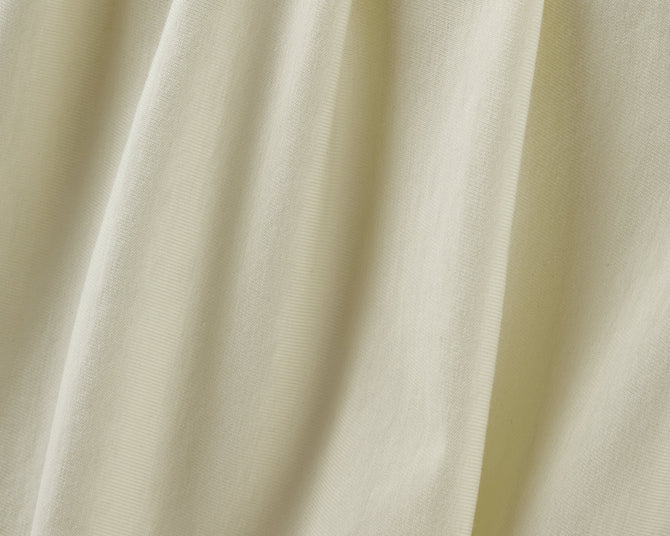




Understanding Fiber Science Behind Lyocell’s Natural Cooling Performance
As the demand for lightweight, breathable summer apparel rises, Lyocell has emerged as one of the most effective natural-performance fibers for hot and humid climates. Designers across the Asia-Pacific, Europe, and North America are increasingly choosing Lyocell for its natural cooling effect — a sensory experience that cotton and polyester alone cannot replicate.
But what makes Lyocell feel cooler against the skin? Why is it preferred for summer knits and tropical active-lounge apparel?
This guide breaks down the fiber science behind Lyocell’s cooling performance, helping designers understand why it has become a core material for next-generation warm-weather knitwear.

Fiber Structure: Why Lyocell Feels Cool on First Contact
The natural cooling sensation of Lyocell begins at the fiber level.
Lyocell: Smooth, Circular, Fine-Fibril Structure
Lyocell fibers are engineered through a closed-loop solvent spinning process, resulting in:
-
Smooth, low-friction fiber surfaces
-
Circular or near-circular cross-sections
-
Fine fibrils that disperse heat efficiently
This structure minimizes surface friction and reduces heat build-up, allowing the skin to feel cooler immediately upon contact — a property inherent to regenerated cellulosic fibers such as Lyocell and widely documented by fiber producers including Lenzing Group – TENCEL™ Lyocell Fiber.
Cotton: Ribbon-Like, Twisted Fiber Morphology
Cotton fibers are naturally irregular and twisted, which:
-
Increases surface friction
-
Traps more air and warmth
-
Retains moisture longer
While cotton is breathable and comfortable, its structure limits its ability to deliver an immediate cooling sensation.
Polyester: Solid, Non-Hydrophilic Filaments
Polyester fibers are hydrophobic and lack natural moisture interaction, leading to:
-
Poor heat dissipation
-
Heat retention near the skin
-
A noticeably warmer touch in humid environments
Conclusion: Lyocell’s smooth, fine, and uniform fiber structure is inherently optimized for surface cooling — unlike cotton or polyester.

Moisture Transport and Evaporative Cooling Efficiency
Cooling performance is closely linked to how quickly a fiber manages moisture.
Lyocell: High Moisture Uptake, Faster Evaporation
Lyocell’s hydrophilic cellulose structure allows it to:
-
Absorb up to 50% more moisture than cotton
-
Rapidly pull sweat away from the skin
-
Spread moisture evenly across the fiber surface
-
Accelerate evaporation and cooling
This mechanism is a key reason Lyocell demonstrates superior thermo-physiological comfort, as shown in independent textile comfort research, including studies referenced by Hohenstein Institute – Thermophysiological Comfort of Textiles.
Cotton: Absorbs Moisture, Releases It Slowly
Cotton absorbs sweat effectively but tends to:
-
Retain moisture in the fiber core
-
Dry slowly
-
Feel damp and warm in humid conditions
This limits its cooling efficiency in tropical or high-activity environments.
Polyester: Repels Moisture
Polyester does not absorb moisture naturally. Without engineered finishes:
-
Sweat remains between skin and fabric
-
Microclimate humidity increases
-
Perceived heat rises
Conclusion: Lyocell’s superior moisture absorption and faster evaporation result in significantly better natural cooling performance.
Thermal Insulation: Why Lyocell Retains Less Heat
Lyocell has inherently lower thermal insulation compared with cotton and polyester.
-
Lower fiber bulk traps less warm air
-
Heat escapes more easily
-
Fabrics feel lighter, fresher, and cooler
This makes Lyocell particularly suitable for:
-
Summer base layers
-
Lightweight jerseys
-
Tropical lifestyle apparel
-
Resort and vacation wear
Surface Sensation: The “Cool Hand” Feel of Lyocell
Designers often describe Lyocell as having a distinctive “cold hand” — similar to silk.
This sensory effect comes from:
-
Reduced frictional heat due to smooth fibers
-
Lower surface temperature through moisture diffusion
-
Fine denier yarns that create a clean, glassy touch
Laboratory and wear tests show Lyocell fabrics can reduce perceived skin temperature by approximately 1–2°C, depending on fabric structure and blend ratio.

Why Lyocell Is Becoming the Preferred Fiber for Hot-Climate Knitwear
Across global fashion markets, Lyocell is increasingly chosen for cooling apparel.
Designers Choose Lyocell For
-
Soft cooling sensation
-
High breathability
-
Moisture-wicking performance
-
Elegant drape and fluidity
-
Natural luster and premium appearance
Consumers Choose Lyocell For
-
Comfort in humid weather
-
Cooling freshness
-
Skin-friendly softness
-
Perceived sustainability
Brands Choose Lyocell For
-
Strong sustainability credentials
-
Stable fiber quality
-
Versatile blending possibilities
-
Premium positioning in summer collections

Regen-tech Fashion: Lyocell for the Next Generation of Summer Knitwear
At Regen-tech Fashion, Lyocell is a foundational fiber in our development of warm-weather fabrics. Our summer knit innovations focus on:
-
Cooling-touch Lyocell jerseys
-
Lyocell × Modal blends for ultra-soft drape
-
Lyocell × Cotton blends for balanced breathability
-
Lyocell × Spandex knits for adaptive movement
These constructions form part of our 2026 Summer Lightweight Knitwear Series, engineered for:
-
Tropical lifestyle apparel
-
Summer base layers
-
Premium casual-lounge collections
-
Elevated resort wear
We ensure:
-
Lower shrinkage
-
Smoother fabric surfaces
-
High color clarity
-
Optimized cooling performance

Lyocell’s natural cooling properties allow us to push breathable luxury forward — without compromising comfort or sustainability.
Regen-tech Fashion — advancing textile performance through precision, comfort, and responsible innovation.
📩 Contact: Marketing@regentech-fashion.com
Article Keywords:
Lyocell Fabrics, Lyocell Cooling Fabrics, Lyocell vs Cotton vs Polyester, Breathable Cellulosic Fibers, Moisture-Wicking Fabrics, Summer Knitwear Fabrics

)