
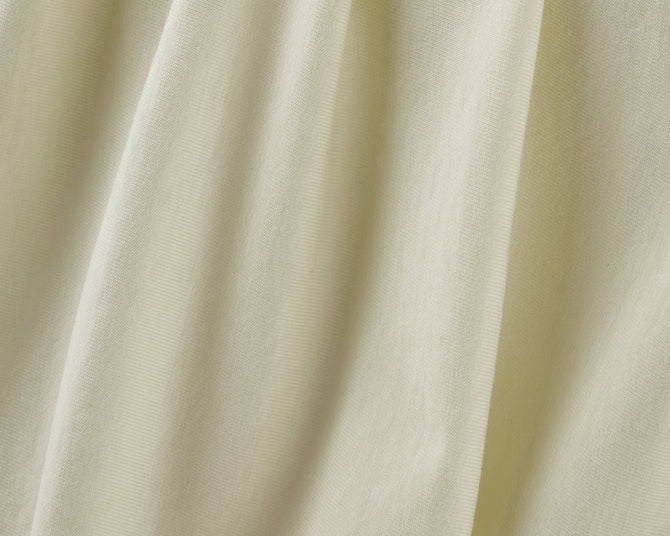



Cotton jersey is a familiar choice for everyday T-shirts, valued for its softness, comfort, and versatility. Cotton-linen jersey offers a different approach, combining cotton's familiar hand feel with linen's natural texture, dry touch, and relaxed aesthetic.
Both fabrics can be used to create comfortable, breathable T-shirts, but their differences become particularly noticeable in surface appearance, drape, and garment silhouette.
For apparel brands and designers, choosing between them depends on the intended style: a clean, classic essential or a more textured, naturally expressive summer T-shirt.
Key Differences Across Practical Criteria
- Hand Feel: Cotton jersey typically feels soft, smooth, and familiar against the skin. Cotton-linen jersey introduces a naturally drier, slightly crisper touch, while the cotton component helps balance linen's characteristic firmness. Depending on the blend ratio, yarn, and finishing, the fabric can range from softly textured to noticeably crisp.
- Appearance & Texture: Cotton jersey generally provides a clean, even surface that works well for minimalist designs, solid colors, and printed graphics. Cotton-linen jersey can feature subtle slubs, irregular yarn details, and a softly matte appearance. These natural variations give even a simple T-shirt more visual depth and material character.
- Drape & Structure: Cotton jersey typically offers a soft, familiar drape that suits classic and relaxed T-shirt silhouettes. Cotton-linen jersey can introduce more fabric body and a lightly structured appearance, particularly at higher linen contents. This makes it appealing for boxy T-shirts, straight-cut silhouettes, and relaxed summer tops that benefit from a natural, less fluid shape.
- Stretch & Recovery: Both fabrics gain mechanical stretch from their knitted loop structure. As linen content increases, cotton-linen jersey may feel less extensible because linen fibers have relatively low elongation. However, actual stretch and recovery depend on yarn design, knit construction, and finishing. For fitted styles requiring stronger recovery, elastane-blended fabrics may be more appropriate.
- Comfort & Breathability: Cotton offers familiar softness and good moisture absorption, making it comfortable for everyday wear. Linen contributes a naturally dry, cool-to-the-touch feel that is particularly appealing in warm weather. In lightweight, breathable jersey constructions, cotton-linen blends can combine these qualities to create comfortable summer T-shirts with a fresh, less clingy hand feel. Actual airflow and drying behavior depend on fabric construction and finishing.
- Natural Fiber Appeal: Both cotton and linen are plant-based fibers. Linen is particularly valued for its natural texture and connection to flax cultivation, which often relies on rainfall in major European growing regions. For brands exploring responsible material choices, cotton-linen blends provide an additional natural-fiber option, with sourcing and processing practices remaining important considerations.
When to Choose Which Fabric
Choose Cotton Jersey When Prioritizing:
- A smooth, consistent surface for prints and solid-color designs.
- Soft, familiar comfort for everyday T-shirts.
- Classic silhouettes with a clean, understated appearance.
- Versatile fabric options across different weights and price points.
Cotton jersey remains an excellent foundation for core basics, promotional T-shirts, casualwear, and collections where consistency and versatility are central to the design.
Choose Cotton-Linen Jersey When Prioritizing:
- Natural slubs, subtle irregularities, and distinctive surface texture.
- A dry, refreshing hand feel for spring and summer apparel.
- Relaxed, boxy, or straight-cut T-shirts with a lightly structured silhouette.
- Premium casualwear where the fabric itself becomes a design feature.
Cotton-linen jersey is especially attractive for elevated essentials and natural-inspired collections. Its distinctive texture can give a simple T-shirt a more considered appearance without relying on prints, embellishments, or complex garment construction.
Comparison at a Glance
| Property | Cotton Jersey | Cotton-Linen Jersey |
|---|---|---|
| Hand Feel | Soft, smooth, familiar | Naturally dry, subtly textured |
| Surface Texture | Usually smooth and even | Natural, often slightly slubby |
| Drape | Soft, familiar drape | Relaxed, sometimes more structured |
| Stretch & Recovery | Depends on construction | Depends on blend and construction |
| Summer Comfort | Soft and breathable | Dry hand feel, breathable in suitable constructions |
| Appearance | Clean, uniform | Textured, natural, relaxed |
| Typical Applications | Classic T-shirts, everyday basics | Summer T-shirts, boxy tops, premium casualwear |
Final Considerations for B2B Fabric Development
For apparel brands and product development teams, the choice should begin with the intended garment rather than fiber composition alone.
A classic cotton T-shirt may prioritize softness, a uniform surface, and consistent production. A premium summer T-shirt, however, may benefit from cotton-linen jersey's distinctive texture and naturally dry touch.
Linen content is an important development consideration. Lower percentages can introduce subtle natural character while maintaining a predominantly cotton-like feel. Higher linen contents can create a more pronounced dry hand, visible texture, and structured appearance.
Yarn selection and finishing also make a difference. Carefully developed cotton-linen yarns can help balance linen's natural character with the softness expected from everyday knitted apparel.
For example, a 55% cotton / 45% linen single jersey at 160 GSM provides a useful starting point for exploring a more pronounced linen texture and relaxed summer silhouette.
Before finalizing a fabric, brands should evaluate the finished hand feel, garment drape, dimensional stability after washing, and appearance across different colors. These practical checks help determine whether the fabric supports the intended fit, comfort, and visual identity.
Ultimately, cotton jersey and cotton-linen jersey serve different design priorities. Cotton jersey offers dependable softness and versatility, while cotton-linen jersey brings natural texture, a refreshing dry touch, and greater visual distinction.
For brands developing premium summer essentials, cotton-linen jersey offers an opportunity to transform a familiar T-shirt silhouette through thoughtful material selection.
FAQ
Which fabric is more breathable for summer T-shirts: cotton-linen jersey or cotton jersey?
Cotton-linen jersey is significantly more breathable due to linen’s superior moisture wicking and thermal conductivity—ideal for hot, humid conditions. While cotton jersey absorbs more moisture overall, it releases it more slowly, making the blend better for evaporative cooling and all-day summer comfort.
How does cotton-linen jersey affect print quality compared to cotton jersey?
Cotton jersey provides a smoother, more uniform surface that enhances print clarity, color vibrancy, and fine detail reproduction. Cotton-linen jersey’s inherent texture and subtle slubs can soften print edges and reduce contrast, making it better suited for tonal, distressed, or artisanal print aesthetics rather than high-definition graphics.
Is cotton-linen jersey suitable for fitted T-shirt styles?
It’s less ideal for tightly fitted styles due to its lower stretch recovery—linen fibers don’t rebound as fully as cotton after stretching. For fitted silhouettes, cotton jersey is preferred; cotton-linen jersey excels in relaxed, boxy, or oversized fits where gentle drape and intentional softening over wear are design assets.
What sustainability advantages does cotton-linen jersey offer over 100% cotton jersey?
Linen requires far less water and fewer pesticides than conventional cotton, so blending it with cotton reduces overall environmental impact. When certified (e.g., GOTS or OCS), cotton-linen jersey also lowers reliance on cotton alone, improves biodegradability, and enhances durability—reducing pilling and extending garment life compared to pure linen knits.
How does the drape of cotton-linen jersey differ from cotton jersey—and why does it matter for design?
Cotton-linen jersey typically has a lighter weight (140–160 gsm) and airier, more fluid drape with less inherent body, creating relaxed, unstructured silhouettes. Cotton jersey offers moderate, consistent drape with more structure—better for clean lines and polished casualwear. Designers choose based on desired volume, movement, and aesthetic intent.
Related Blogs
Add a short description for your brand news

Linen vs Cotton: Which Is Better for Summer Wear?

Why Designers Love Linen Blends: Cotton-Linen / TENCEL™-Linen / Wool-Linen

What Is Linen Fabric? A Complete Guide for Modern Apparel Designers