



Linen brings a distinctive character to summer clothing. Its natural texture and dry handfeel make it a familiar choice for relaxed T-shirts, dresses and contemporary casualwear. But not every linen-inspired design calls for the crispness or pronounced texture of a conventional linen fabric.
For some garments, designers want a softer touch against the skin, a more fluid drape or enough stretch to create a fitted silhouette without losing the natural appearance of the material.
Blending Cupro, Lyocell and Linen offers one way to explore this balance. Each fiber contributes a different quality, while yarn development, coloration and knit construction determine how those characteristics come together in the finished fabric.
What Is Cupro Fabric?
Cupro is a regenerated cellulosic fiber produced from cotton linters, the fine fibers surrounding cotton seeds. The cellulose is dissolved through a cuprammonium process and regenerated into fibers.
Known for its smooth handfeel, subtle luster and moisture-absorbing properties, Cupro has traditionally been used in premium garment linings, particularly for tailored clothing. Its soft, silk-like character also makes it relevant to underwear, shirts and other garments designed for close contact with the skin.
These characteristics make Cupro an interesting material beyond conventional linings.
When incorporated into knitted fabrics, Cupro can be combined with other fibers to explore different surface textures, drape and tactile qualities. Rather than replacing silk or linen, it becomes another component in a broader material design.
Why Blend Cupro with Lyocell and Linen?
Cupro, Lyocell and Linen are all cellulosic fibers, but they bring different characteristics to fabric development.
| Fiber | Key Characteristics | Role in Blend Development |
|---|---|---|
| Cupro | Smooth, silk-like handfeel and subtle luster | Adds a refined tactile dimension |
| Lyocell | Softness, moisture absorption and fluid drape | Provides a soft foundation for everyday comfort |
| Linen | Natural texture and a relatively dry handfeel | Introduces surface character and a linen-inspired aesthetic |
The objective is not necessarily to maximize the proportion of any individual fiber.
A predominantly Lyocell fabric, for example, can incorporate smaller amounts of Cupro and Linen to explore a combination of smoothness and natural texture. The result may offer a different handfeel and visual character from conventional Lyocell jerseys or cotton-linen blends.
However, fiber composition alone cannot predict how a fabric will feel or perform.
Yarn count, spinning methods, knit construction, fabric weight and finishing all influence the final result. Two fabrics with similar fiber percentages can behave differently once they are knitted and made into garments.
This makes material selection only the starting point of fabric development.
Beyond Fiber Content: Yarn Development and Heathered Textures
The visual character of a blended fabric is another important consideration.
Cupro, Lyocell and Linen differ in their fiber characteristics and can respond differently during coloration and processing. These differences introduce technical considerations, but they can also contribute to distinctive surface effects.
One example is the development of heathered textures.
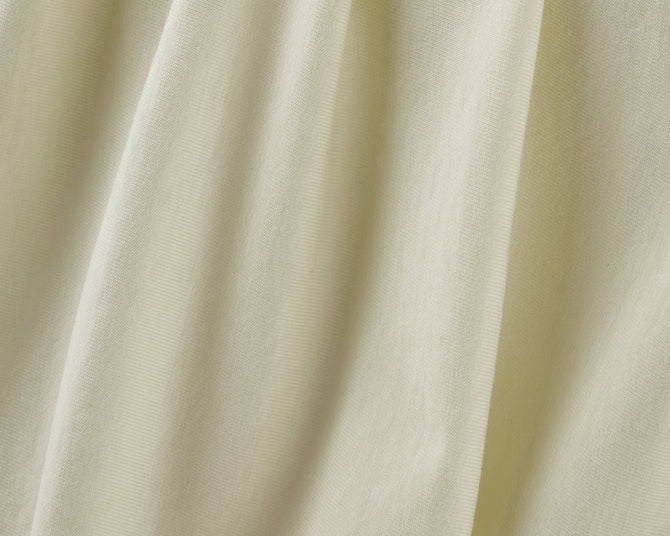
Rather than producing a completely uniform solid color, heathered yarns create subtle variations across the fabric surface. From a distance, the garment may appear relatively consistent in tone. Up close, finer variations in color and texture become visible.
For contemporary T-shirts and premium everyday clothing, this can add depth without relying on prints or decorative details.
Regen-tech Fashion explores this direction through its Cupro, Lyocell and Linen knit fabrics, combining multi-fiber blends with yarn and coloration development to create refined, naturally textured surfaces.

Color consistency and colorfastness remain important considerations. Different fiber combinations and processing routes require appropriate testing to ensure that the intended appearance can be maintained through production and garment care.
How Knit Construction Changes the Fabric
Beyond fiber selection and surface appearance, knit construction plays a major role in determining how a fabric behaves in a garment.
Single Jersey: Softness and Drape
Single jersey provides a relatively smooth, flexible surface and is commonly used for T-shirts and lightweight casual tops.
For a Cupro, Lyocell and Linen blend, a lighter single jersey can be considered for designs that emphasize softness, comfortable movement and natural drape.
1×1 Rib: Fine Texture and Stretch
A 1×1 rib introduces closely spaced vertical ribs and inherent crosswise extensibility.
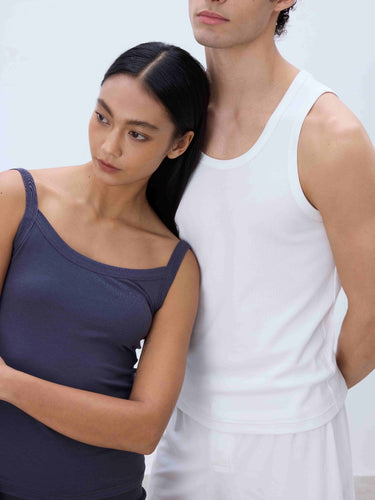
Combined with elastane, this construction can be developed for fitted tops, tanks and other garments where stretch and recovery are important.
2×2 Rib: A More Pronounced Ribbed Surface
A 2×2 rib creates a different visual rhythm, with broader rib columns that can give the fabric a more noticeable textured appearance.
In heavier constructions, it can be explored for garments requiring a more substantial handfeel and a defined silhouette.
Neither rib structure guarantees superior recovery or shape retention on its own. These properties depend on the complete fabric design and should be evaluated through physical testing and garment sampling.
Exploring Regen-tech's Cupro, Lyocell and Linen Knit Fabrics

Regen-tech Fashion has developed several Cupro, Lyocell and Linen blends with different weights, elastane contents and knit constructions.
The collection illustrates how a similar fiber concept can be adapted to different garment requirements.
| Fabric | Composition | Weight | Width | Construction |
|---|---|---|---|---|
| 6618 | 72.9% Lyocell / 8.9% Cupro / 7.1% Linen / 11.1% Elastane | 220 GSM | 170 cm | 1×1 Rib |
| 6598 | 74.8% Lyocell / 9.4% Cupro / 9.4% Linen / 6.4% Elastane | 240 GSM | 145 cm | 2×2 Rib |
Two Constructions, Different Design Possibilities
6618 moves into a 220 GSM 1×1 rib construction. With 11.1% elastane, it offers a different starting point for developing stretch-oriented tops, fitted tanks and other close-to-body silhouettes. Actual stretch and recovery should be assessed on the finished fabric.
At 240 GSM, 6598 combines a 2×2 rib structure with 6.4% elastane. Its more substantial weight and pronounced ribbed surface make it particularly relevant to fitted T-shirts, sleeveless tops and knit dresses where texture and silhouette are important.
Across these two qualities, Lyocell remains the dominant fiber, while Cupro and Linen each account for a smaller proportion of the blend.
The distinction between the fabrics therefore lies not simply in their composition, but in the relationship between fiber selection, construction, weight and intended garment design.
Material Design for Modern Everyday Apparel
A premium T-shirt does not always need an elaborate silhouette to stand apart.
Subtle surface texture, the way a fabric drapes, its feel against the skin and how it responds to movement can all shape the character of a finished garment.
Cupro, Lyocell and Linen blends offer designers another way to explore these details, bringing together refined tactile qualities, natural-looking textures and different knitted constructions.
At Regen-tech Fashion, we develop blended knit fabrics with a focus on how materials translate into actual garments, from everyday T-shirts and fitted tops to contemporary dresses.
Explore our Cupro, Lyocell and Linen knit fabrics or contact our team to discuss fabric samples and development possibilities for your next collection.