
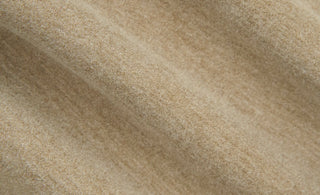
Two fleece fabrics with nearly identical fiber compositions and GSM can look and feel remarkably different. One may have a loose, fluffy pile, while the other features a compact, closely cropped nap with a clean, sophisticated appearance. Much of this difference comes down to dyeing and surface finishing.
From multi-fiber dyeing to raising, brushing, polishing and shearing, each manufacturing stage shapes the final character of the fabric.
Dyeing Comes First: How Multi-Fiber Blends Influence Fleece Quality
The foundation of a high-quality fleece is established well before mechanical raising begins.
In blends containing wool, acrylic, viscose and cotton, each fiber presents distinct processing requirements:
- Wool is sensitive to temperature, pH and mechanical friction. Improper wet processing can cause felting, hardening and fiber damage.
- Acrylic requires compatible cationic dyes and carefully controlled heating profiles.
- Viscose and cotton, both cellulosic fibers, differ in dye uptake and dimensional behavior during wet processing.
Multi-fiber dyeing requires coordinated dyeing stages, precise chemical selection and temperature control to achieve consistent coloration across different fibers and fabric surfaces.
Wet processing, softening treatments and fiber moisture content also influence fiber cohesion and surface friction, directly affecting how evenly fibers are lifted during subsequent raising operations.
Precision fleece manufacturing therefore begins at the dyeing stage, not at the raising machine.
Raising, Brushing, Polishing and Shearing: How a Fleece Surface Is Created
Mechanical finishing transforms the knitted substrate into a fabric with a distinct pile, hand feel and visual character. Each operation serves a specific purpose.
Raising
Raising, also known as napping, uses rollers covered with fine metal wire teeth to lift fibers from the yarn structure.
The raised fibers create a soft, insulating layer that retains air, adding loft and warmth to the fabric. Fiber selection, yarn construction, raising intensity and machine settings determine the resulting pile characteristics.
Brushing
Brushing aligns the raised fibers, improves pile distribution and reduces entanglement.
Within a multi-stage finishing process, this operation organizes the nap and prepares it for subsequent polishing and shearing.
Polishing
Polishing uses heated rollers, controlled fabric tension and mechanical contact to improve fiber alignment, smoothness and surface luster.
The process is particularly valuable when developing a clean, orderly nap with a more sophisticated visual finish.
Shearing
Shearing uses precision spiral blades to trim protruding fibers to a controlled height.
A closely cropped finish creates a compact, even nap, while a longer pile produces a fuller, more visibly textured appearance. This distinction allows fabric developers to tailor the surface to different garment aesthetics.
Setting
Setting uses controlled processing conditions to stabilize fabric dimensions and establish the intended final appearance.
The combination and repetition of these operations determine the finished pile height, density, direction and hand feel.
Why Progressive Raising Matters
The challenge in fleece manufacturing is to develop sufficient pile without compromising fiber integrity or the strength of the underlying knit.
Excessively aggressive raising increases the risk of fiber breakage, damage to knitted loops and uneven pile formation. Excess loose fibers also contribute to shedding, pilling and matting during wear and laundering.
Progressive raising addresses these challenges through multiple, controlled processing stages. Fibers are gradually lifted, organized through brushing and polishing, and trimmed through successive shearing operations.
This approach balances pile fullness with fiber integrity and substrate strength, producing a compact, consistent nap without relying on excessive raising intensity.
Precision Fleece Finishing at Regen-Tech Fashion
Within Regen-Tech Fashion's Heat Flow collection, finishing techniques are developed in coordination with fiber composition, yarn design and knit construction.
27-Stage Precision Fleece Finishing: 6556D, 6557D and 6373D
This family of multi-fiber wool-blend fleece fabrics features custom-spun yarns and a differentiated face-and-back construction.
The face combines acrylic, wool and viscose, while the reverse combines viscose and cotton.
Following a three-stage dyeing process tailored to the different dyeing characteristics of these fibers, the fabrics undergo 27 precision raising and surface-finishing operations.
Successive raising, brushing, shearing and setting create a tightly controlled, short-pile finish on both sides. The process is designed to minimize pile irregularities and flattening while maintaining a soft, substantial hand.
The compact nap gives these fabrics a clean appearance without the pronounced bulk associated with longer-pile fleece. Combined with a supportive knit structure, this makes them well suited to winter trousers, coordinated sets, midlayers and jackets.
Available in 300, 340 and 380 GSM options, this fabric family has been established in commercial-scale production.
12-Stage Surface Finishing and Multi-Layer Knit Construction: 6379D and 6562D
Repeated mechanical finishing places considerable demands on the knitted substrate. Sufficient yarn coverage and structural strength are essential to withstand successive raising and shearing operations.
In 6379D and 6562D, a multi-layer knit construction is combined with a 12-stage raising, shearing and polishing process.
The closely cropped outer pile delivers a soft hand, while the underlying construction provides fullness, fabric body and structural support.
These developments demonstrate how precision finishing can be applied to different knit architectures, expanding the possibilities for both relaxed and structured winter apparel.
Regen-Tech Fashion also applies traditional teasel raising techniques associated with premium woolen fabrics to selected knitted developments, including 6601D, 6602D and 6605F–6607F, creating a wool-like nap and natural surface luster.
What Defines a High-Quality Fleece Surface?
Beyond fiber composition and GSM, apparel developers should assess three characteristics when selecting fleece fabrics.
- Pile Uniformity: Inspect the full fabric width under angled lighting for uneven pile height, irregular fiber distribution and visible raising marks or streaks. For double-sided fleece, examine both surfaces against their intended finish.
- Pile Fineness: Match pile height and texture to the desired garment silhouette. A closely cropped, low-profile nap complements structured trousers and tailored layers, while a loftier pile creates a fuller appearance suited to relaxed outerwear.
- Surface Durability: Evaluate pilling and matting using the modified Martindale method (ISO 12945-2) or the pilling box method (ISO 12945-1). Supplement these tests by checking fiber shedding after repeated laundering and pile recovery following compression.
Heat Flow: Precision Finishing for Contemporary Winter Apparel
The quality of a fleece fabric is shaped by the entire manufacturing process, from yarn development and multi-fiber dyeing to knit construction and mechanical finishing.
Regen-Tech Fashion's Heat Flow collection brings these capabilities together, offering fabrics that range from compact, wool-like finishes to fuller, softer fleece constructions for contemporary winter apparel.
Explore our Heat Flow collection or contact our team for fabric samples, technical specifications and material development support.


