
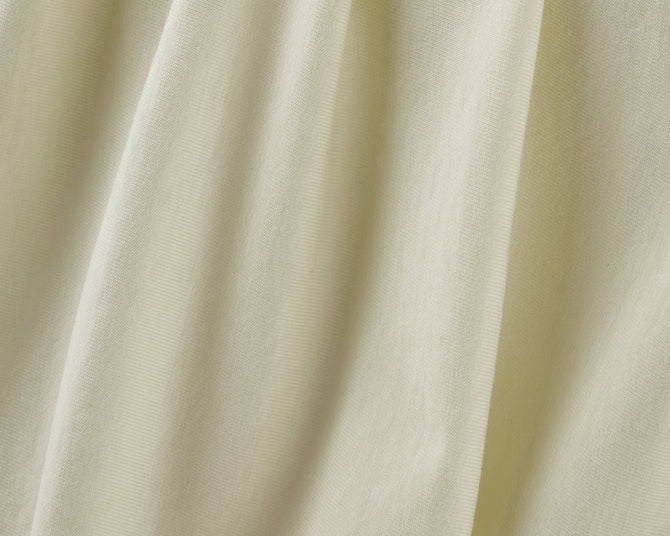



Cotton has long been a staple of everyday T-shirts, valued for its natural comfort, versatility, and familiar hand feel. But for brands looking to create softer, more fluid, or more refined essentials, cotton-modal blends offer another appealing option.
By combining cotton with modal, a regenerated cellulose fiber known for its smooth touch and drape, fabric developers can introduce a different wearing experience without losing the familiar qualities of cotton.
The choice isn't necessarily about which fabric performs better overall. It's about how each material influences the T-shirt's texture, silhouette, comfort, and positioning.
Key Differences Between Cotton and Cotton-Modal Knit Fabrics
1. Hand Feel: Natural Cotton vs. Silky Softness
100% cotton jersey offers a familiar, natural hand feel that can range from soft and supple to crisp and dry, depending on yarn quality, knitting construction, and finishing. Combed cotton and finer yarns, for example, can produce particularly smooth and comfortable fabrics.
Cotton-modal blends introduce a different tactile quality. Modal fibers are known for their smoothness and softness, which can give the fabric a silkier, more supple touch.
This difference is especially noticeable in lightweight T-shirts worn directly against the skin. Modal can help create the soft, comfortable experience associated with premium everyday essentials and loungewear.
2. Drape and Silhouette: Structure vs. Fluidity
Drape is one of the most noticeable differences between cotton and cotton-modal T-shirt fabrics.
Cotton jersey can provide a balance of softness and body. With suitable yarns, fabric weight, and construction, it can support clean lines and relaxed silhouettes, making it popular for classic crewneck T-shirts, boxy fits, and heavyweight basics.
Cotton-modal blends often have a more fluid drape. The addition of modal can soften the fabric's movement, allowing it to fall more naturally along the body.
For brands developing relaxed women's tops, refined layering pieces, or lightweight premium T-shirts, this softer drape can become part of the garment's design appeal.
However, fiber composition isn't the only factor. A tightly knitted cotton-modal fabric can still provide substantial body, while a lightweight cotton jersey can also be exceptionally fluid.
3. Appearance and Surface Texture
Cotton is valued for its natural, often matte appearance. Depending on the yarn and finishing process, cotton jersey can range from subtly textured to smooth and refined.
Cotton-modal blends often offer a smoother surface with a soft, understated luster. This can create a cleaner, more fluid visual effect, particularly in fine-gauge knitted fabrics.
These differences offer designers distinct aesthetic directions:
- Cotton jersey: Classic, natural, understated, and suitable for both vintage-inspired and contemporary casualwear.
- Cotton-modal jersey: Smooth, softly lustrous, and well suited to minimalist designs and elevated everyday essentials.
Neither appearance is inherently superior. The choice depends on the intended garment style and brand identity.
4. Moisture Absorption and Everyday Comfort
Both cotton and modal are cellulose-based fibers with good moisture absorption characteristics.
Cotton is widely appreciated for its breathable comfort in everyday clothing. Modal also absorbs moisture effectively and can contribute to a comfortable next-to-skin experience.
In lightweight cotton-modal jersey fabrics, the combination of moisture absorption, softness, and fluid drape can be particularly appealing for casual T-shirts, layering tops, and loungewear.
However, moisture absorption should not be confused with moisture wicking or quick-drying performance. How a finished fabric handles sweat depends on its yarns, knitting structure, finishing, and other design factors.
For everyday T-shirts, the practical advantage of cotton-modal blends is often their combination of softness, absorbency, and comfortable movement rather than a guaranteed improvement in drying speed.
5. Stretch and Shape Retention
Neither cotton nor modal is an inherently elastic fiber like spandex or elastane.
Both cotton and cotton-modal jersey fabrics can stretch through their knitted loop structures. However, their ability to recover after stretching depends on factors such as yarn characteristics, construction, finishing, and whether elastane is included.
Adding modal should not automatically be treated as a way to improve elastic recovery or prevent garments from losing shape.
For fitted T-shirts or stretch-sensitive designs, brands may consider cotton-modal-elastane blends or suitable rib constructions to achieve the desired balance of softness, stretch, and recovery.
Cotton vs. Cotton-Modal: Comparison at a Glance
| Property | 100% Cotton Knit | Cotton-Modal Blend |
|---|---|---|
| Hand feel | Natural, soft, sometimes dry or crisp | Smooth, silky, and supple |
| Drape | Can range from structured to fluid | Often softer and more fluid |
| Appearance | Natural, often matte | Smooth with subtle luster |
| Moisture absorption | Good | Good; modal contributes effective absorption |
| Stretch | Mechanical stretch from knit structure | Mechanical stretch from knit structure |
| Shape retention | Depends on construction and finishing | Depends on construction and finishing |
| Typical applications | Classic tees, boxy fits, structured basics | Soft-touch tees, relaxed tops, premium essentials |
Sustainability and Sourcing Considerations
Both cotton and modal offer opportunities for brands exploring responsibly sourced materials, but their environmental profiles depend on sourcing and manufacturing practices.
For cotton, options include certified organic cotton and cotton sourced through recognized responsible cotton programs. These approaches differ in their requirements and traceability systems.
Modal is produced from wood-based cellulose. Responsibly manufactured options, such as TENCEL™ Modal, can offer advantages related to controlled wood sourcing and resource-efficient production.
It is important to distinguish modal from lyocell, as the two fibers use different manufacturing processes. Environmental claims should refer to the specific fiber supplier and production method rather than treating all modal fabrics as equally sustainable.
For apparel brands, the most useful approach is to evaluate verified material origins, relevant certifications, processing practices, and finished fabric quality.
When Should Brands Choose Cotton or Cotton-Modal?
Choose 100% Cotton for Classic and Structured T-Shirts
Cotton remains an excellent option for brands developing:
- Classic crewneck T-shirts and everyday basics.
- Heavyweight or boxy silhouettes requiring more fabric body.
- Vintage-inspired collections with a natural, matte aesthetic.
- Collections emphasizing cotton-specific sourcing or certification requirements.
Cotton is also highly versatile. By changing yarn count, fabric weight, knitting density, and finishing, brands can achieve dramatically different results without changing the fiber composition.
Choose Cotton-Modal for Softer, More Fluid Essentials
Cotton-modal blends are particularly attractive for:
- Premium T-shirts emphasizing softness against the skin.
- Lightweight, relaxed-fit tops with fluid drape.
- Women's everyday essentials and comfortable layering pieces.
- Loungewear and elevated casualwear collections.
- Minimalist designs where fabric touch and movement become key selling points.
The modal content can be adjusted to explore different balances of familiar cotton hand feel and silky softness. The final effect depends on the blend ratio as well as the yarn and fabric construction.
What to Evaluate Before Bulk Production
For apparel developers, comparing cotton and cotton-modal fabrics should go beyond the composition label.
Ideally, evaluate samples with similar fabric weights and knitted constructions to understand the contribution of the fiber blend.
Pay particular attention to:
- Hand feel and drape: How does the fabric feel and fall when made into the intended T-shirt silhouette?
- Dimensional stability: How do garment measurements change after washing?
- Stretch and recovery: Does the fabric provide the movement and fit required by the design?
- Surface appearance: How well does the fabric maintain its appearance through wear and laundering?
- Cost and production suitability: Does the finished fabric offer the right balance of material value, target price, and production requirements?
These considerations are especially relevant when developing core T-shirt styles intended for repeat production.
Final Recommendation
Cotton and cotton-modal blends offer two valuable approaches to T-shirt development.
100% cotton remains a versatile foundation for natural-feeling, classic, and structured everyday clothing. Cotton-modal blends introduce a softer touch, smoother appearance, and more fluid drape, making them attractive for premium essentials and comfort-focused collections.
For brands looking to differentiate simple T-shirts through material quality, cotton-modal blends are worth exploring—not because they outperform cotton in every property, but because they offer a distinct tactile and visual experience.
Ultimately, the best fabric is the one that delivers the intended garment feel, silhouette, and quality at the right price point.
Explore Regen-tech Fashion's knit fabric options and discover how the right fiber blend, hand feel, and construction can elevate your next T-shirt collection.
FAQ
What are the main performance advantages of cotton-modal blends over 100% cotton for everyday T-shirts?
Cotton-modal blends offer superior softness from first wear, enhanced drape with better shape retention, improved moisture wicking—especially in humidity—higher elongation and recovery (reducing bagginess), and a smoother, subtly lustrous surface ideal for modern casual aesthetics.
How does modal impact shrinkage and color consistency in T-shirt production?
Modal’s dimensional stability reduces overall fabric shrinkage to under 3%, compared to 4–7% for standard cotton knits. Its uniform fiber structure also ensures more consistent dye uptake, supporting reliable color matching across batches and minimizing cutting waste due to predictable yardage yield.
Are cotton-modal blends more sustainable than conventional cotton—and what certifications should buyers look for?
Yes—modal derived from FSC-certified beechwood and produced via closed-loop lyocell processes uses up to 95% less water than conventional cotton and is fully biodegradable. Buyers should specify FSC or PEFC certification for wood pulp and OEKO-TEX® Standard 100 or EU Ecolabel for process integrity, alongside BCI or GOTS for the cotton component.
Do cotton-modal blends require special care during manufacturing (e.g., knitting, dyeing, or cutting)?
No major adjustments are needed—but modal’s higher absorbency and lower torque can affect knit tension and dye migration. We recommend partnering with mills experienced in blended jersey construction and conducting pre-production tests for stitch balance, seam slippage, and wash-down behavior to ensure optimal performance.
When is 100% cotton still the better choice for a T-shirt line—even with modal’s advantages?
100% cotton remains ideal for cost-sensitive basics, heavyweight structured styles (e.g., 6.5+ oz/yd²), heritage or vintage-inspired collections emphasizing natural texture and break-in character, and transparency-driven lines anchored in GOTS organic or BCI-certified cotton supply chains.
Related Blogs
Add a short description for your brand news

Lyocell vs Polyester vs Cotton Blends: Choosing the Right Fabric for Lifestyle & Athleisure Collections

Linen vs Cotton: Which Is Better for Summer Wear?

Best Merino Wool Fabrics for Luxury Essentials (T-Shirts, Polos, Base Layers)