
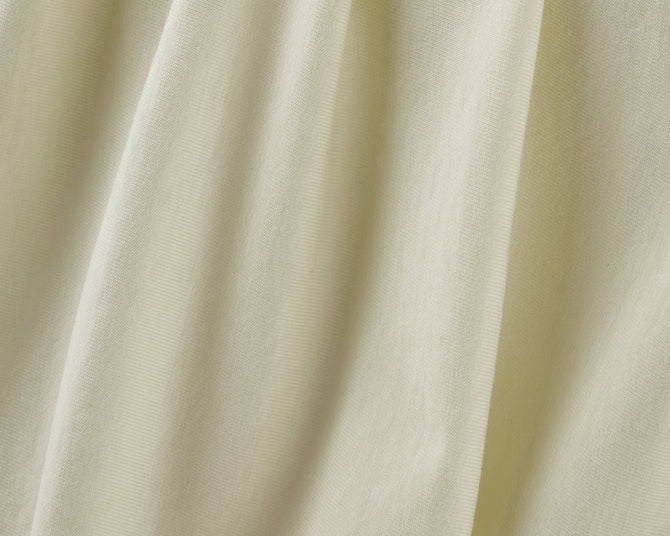



Why Scuba Knit Stands Out for Sweatshirts
Scuba knit is a structured fabric commonly produced using a compact double-knit construction. Typically made from polyester, nylon, or blends containing elastane, it is valued for its smooth surface, substantial hand feel, and ability to support defined garment shapes.
For sweatshirts, these characteristics offer a different design direction from traditional fleece or French terry. Rather than emphasizing a soft, relaxed drape, scuba knit can create cleaner lines and more sculpted silhouettes, making it particularly suitable for modern athleisure, minimalist sweatshirts, and structured hoodies.
Its performance, however, depends on more than the fabric name. Fiber composition, knitting construction, fabric weight, and finishing all influence how a particular scuba knit feels, stretches, and performs in a finished garment.
Key Fabric Properties That Impact Sweatshirt Performance
- Structure & Body: Scuba's compact construction provides body and shape retention, making it suitable for boxy, oversized, or cropped sweatshirts that require a more defined silhouette. The degree of structure varies with fabric thickness, density, and yarn selection.
- Stretch & Recovery: Many scuba knits offer comfortable stretch, while elastane-containing versions can provide additional elasticity and recovery. Actual performance should be evaluated according to the fabric's composition and construction.
- Surface Texture & Hand Feel: Scuba typically features a smooth, relatively uniform surface, with finishes ranging from matte to slightly lustrous. Its substantial hand feel can contribute to a more refined appearance than conventional casual sweatshirt fabrics.
- Dimensional Stability: Compact double-knit constructions can offer good dimensional stability, supporting consistent garment shapes. However, shrinkage, distortion, and appearance changes should be evaluated through appropriate testing.
- Comfort & Breathability: Scuba fabrics vary considerably in thickness and air permeability. Heavier or denser constructions may provide more coverage and structure but can also feel warmer and less breathable, making fabric selection important for different seasons.
Scuba Knit vs. French Terry and Fleece
Although all three fabrics can be used for sweatshirts, they offer different textures, silhouettes, and wearing experiences.
- Scuba Knit: Known for its smooth surface and structured appearance. It is particularly suited to sweatshirts with clean lines, sculpted shapes, and contemporary athleisure styling.
- French Terry: Typically features a smooth outer surface and loops on the reverse side. It is widely used for casual sweatshirts and hoodies that prioritize everyday comfort and a more relaxed feel.
- Fleece: Often features a brushed or raised surface designed to create a soft, insulating hand feel. It is a common choice for warmer sweatshirts, casual layering, and cold-weather apparel.
For designers, the choice is largely about the intended garment. Scuba can be particularly useful when silhouette and surface appearance are central to the design, while French terry and fleece offer different options for softness, warmth, and traditional sweatshirt styling.
Sustainability Considerations in Modern Scuba Knits
Scuba fabrics are commonly produced using synthetic fibers, but recycled polyester options are also available for brands seeking to reduce their reliance on virgin polyester.
When evaluating these materials, it is important to distinguish between recycled content, chemical safety, and fabric performance.
- Recycled Polyester: Recycled polyester can replace a portion of virgin synthetic material. Brands should confirm the recycled content and review relevant supply chain documentation.
- GRS Certification: The Global Recycled Standard addresses recycled material verification and chain of custody, alongside additional processing requirements. Certification claims should be checked against the relevant product and supply chain.
- OEKO-TEX® STANDARD 100: This certification concerns testing for harmful substances in textiles. It does not independently verify recycled content or establish the overall environmental impact of a fabric.
Recycled content alone does not determine stretch recovery, abrasion resistance, or durability. These properties still depend on yarn quality, fabric construction, finishing, and the performance of the finished material.
Choosing the Right Scuba Knit for Your Sweatshirt Design
Selecting scuba knit involves matching fabric characteristics to the intended garment rather than relying on a single composition or weight.
Consider the following questions:
- Is silhouette precision important? Choose a fabric with sufficient body and structural support for cropped, boxy, or oversized sweatshirts. Compare fabric weight, thickness, and drape using actual garment samples.
- Is stretch and movement a priority? Explore elastane-containing constructions and evaluate recovery after repeated stretching, particularly for fitted or movement-oriented designs.
- Is the sweatshirt intended for year-round wear? Consider lighter constructions and assess air permeability, hand feel, and thermal comfort. A dense, heavyweight scuba may be better suited to cooler conditions.
- Is surface durability essential? Request relevant pilling and abrasion test results, especially for garments expected to experience frequent washing and everyday friction.
Fabric weight is a useful starting point, but GSM alone cannot determine whether a scuba knit will feel structured, flexible, or comfortable. Two fabrics with similar weights may behave differently because of their yarns, knitting constructions, and finishing processes.
Evaluating Samples Before Bulk Production
Before confirming a scuba knit for sweatshirt production, apparel development and sourcing teams should evaluate how the material performs in both fabric and garment form.
- Stretch and Recovery: Stretch fabric samples in the relevant directions and observe their ability to return toward their original dimensions. For quantitative evaluation, request results from appropriate standardized testing rather than relying solely on manual inspection.
- Surface Durability: Examine the fabric for fuzzing, pilling, and abrasion after handling or testing. Standardized test results provide a more reliable basis for comparing suppliers and fabric options.
- Cutting and Sewing Behavior: Check cut-edge curling, seam appearance, and sewing performance. Particular attention should be paid to bulky seams, neckline construction, and the interaction between the main fabric and ribbed trims.
- Washing and Dimensional Stability: Evaluate shrinkage, twisting, surface changes, and colorfastness under the intended care conditions. Testing a finished sweatshirt can also reveal issues that are less apparent in fabric swatches.
For B2B sourcing, comparing samples under consistent conditions is more useful than assuming that all scuba knits will deliver the same performance.
Final Thoughts
Scuba knit offers apparel brands a distinctive approach to sweatshirt design, combining a smooth, modern surface with the potential for structured silhouettes and comfortable stretch.
Its advantages are most evident when the fabric is selected for a specific design purpose rather than treated as a universal replacement for French terry or fleece.
By considering construction, weight, elasticity, finishing, and garment-level performance, designers and sourcing teams can identify scuba knits that align with their desired balance of appearance, comfort, and durability.
Explore Regen-tech Fashion's structured knit fabric options to bring refined texture, confident silhouettes, and thoughtful material selection to your next sweatshirt collection.
FAQ
What makes scuba knit fabric especially suitable for structured sweatshirt designs compared to traditional fleece or jersey?
Scuba knit’s double-knit construction delivers superior dimensional stability, minimal edge curling, and exceptional stretch recovery—unlike loopback fleece (prone to bagging) or single-knit jersey (lacks structure). Its inherent body supports intentional silhouettes (e.g., boxy, cocoon, or cropped styles) without stiffness, while its smooth, low-pile surface ensures clean layering and reduced pilling over time.
How much elastane should a performance-oriented scuba knit sweatshirt fabric contain—and why does it matter?
Optimal elastane content is 3–5%: this delivers 20–30% horizontal stretch with near-total recovery, preventing sagging at high-stress areas like elbows and hems. Exceeding 6% risks premature relaxation and loss of shape after repeated wear—compromising the garment’s longevity and fit integrity.
What GSM range is recommended for versatile, everyday sweatshirts—and how does weight affect function?
For balanced drape, structure, and layering versatility, choose 290–310 gsm scuba knit. Lower GSM (<280) may lack body for tailored shapes; higher GSM (320+ gsm) excels in premium, silhouette-critical pieces (e.g., cropped hoodies) but can limit breathability in mid-layer applications.
Are sustainable scuba knits (e.g., rPET or bio-nylon) performance-equivalent to conventional versions?
Yes—when sourced from certified mills with rigorous yarn quality control and optimized knitting tension, recycled polyester (GRS-certified) or bio-based nylon retains identical stretch recovery, abrasion resistance (Martindale ≥25,000), and dimensional stability (<3% shrinkage). Always verify mill-level documentation and dyeing processes (e.g., metal-free disperse dyes) to ensure consistency.
What technical specs should B2B buyers request from suppliers to ensure production efficiency and quality consistency?
Request verified data on: (1) GSM tolerance (±3 gsm), (2) shrinkage (<3% width/length after standard wash), (3) stitch density (courses/cm), (4) Martindale abrasion rating (≥25,000 cycles for daily wear), and (5) Oeko-Tex Standard 100 or GRS certification. Avoid relying solely on supplier claims—insist on lab test reports and mill traceability.
Related Blogs
Add a short description for your brand news

Nylon vs Polyester for Stretch Knit Fabrics: Which Performs Better in Modern Knitwear?

Knit Structures Used in Athleisure Fabrics: A Guide for Performance & Fabric Development

Cotton vs Polyester in Knit Fabrics: Comfort or Structure for Urban Commuterwear?