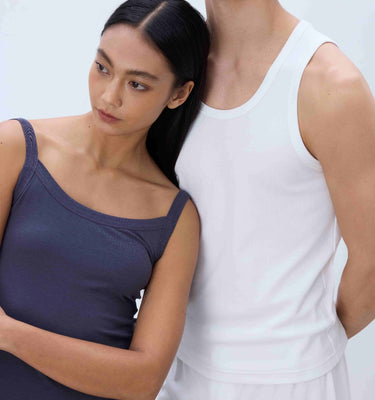
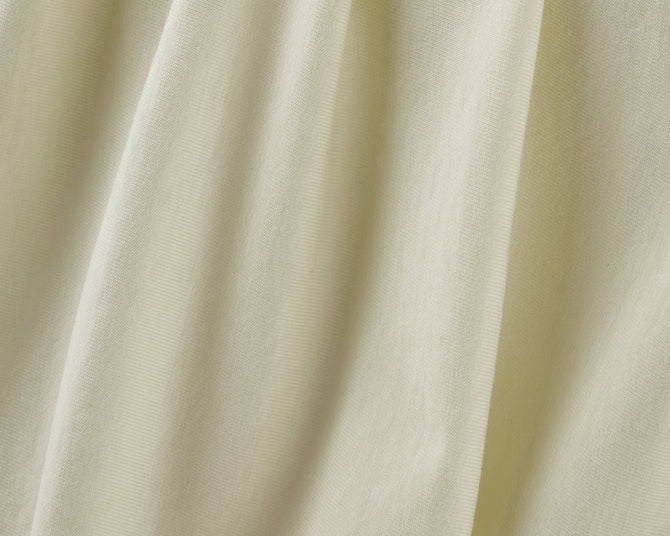



Lightweight base layers need to feel comfortable against the skin while managing moisture, adapting to temperature changes, and moving naturally with the body. For apparel brands developing premium next-to-skin garments, both 100% Merino wool and Merino-lyocell blends offer compelling advantages.
Pure Merino wool is valued for its natural temperature regulation, odour resistance, and resilience. Blending Merino with lyocell introduces another dimension: a smoother hand feel, fluid drape, and opportunities to create lighter, more refined knitted fabrics.
Neither option is universally better. The right choice depends on the intended garment, wearing conditions, fabric construction, and desired aesthetic.
Key Differences Across Practical Criteria
Hand Feel & Next-to-Skin Comfort
- 100% Merino Wool: Fine Merino fibres, often around 17–19.5 microns for premium next-to-skin applications, offer a soft, comfortable touch with minimal prickling. Wool's natural crimp contributes to a slightly fuller, more cushioned hand feel. Fibre fineness, yarn quality, and finishing all influence the final sensation against the skin.
- Merino-Lyocell Blends: Lyocell introduces a naturally smooth, silky touch that complements Merino's softness. Depending on the blend ratio and construction, these fabrics can feel cooler at first contact, with a more fluid and refined surface. This makes them attractive for fitted long-sleeve tops, lightweight layering pieces, and premium everyday essentials.
The distinction is often one of character rather than softness alone: pure Merino tends toward a naturally wool-rich feel, while lyocell-rich blends can offer a smoother, more flowing expression.
Moisture Management & Breathability
Merino wool is particularly effective at absorbing and releasing moisture vapour. This helps buffer changes in humidity near the skin and supports comfort across changing temperatures and activity levels. Its natural odour-management properties are another advantage, especially for garments worn over extended periods.
Lyocell also offers high moisture absorption and release, contributing to a comfortable microclimate against the skin. In Merino-lyocell blends, the two fibres work together to provide moisture comfort while allowing designers to adjust the fabric's tactile qualities.
However, moisture absorption should not be confused with rapid sweat wicking or quick drying. Liquid moisture transport, drying time, and air permeability depend on yarn design, knitting density, fabric weight, and finishing.
For lightweight base layers, an appropriately constructed jersey may provide greater airflow than a denser interlock, regardless of whether the material is pure Merino or a blend.
Structure, Stretch & Recovery
Merino wool has natural elasticity, helping fibres recover after bending and stretching. In knitted fabrics, this resilience works alongside the loop structure to provide flexibility and comfort.
Lyocell contributes good fibre strength and a smooth, fluid appearance, but it is not an elastic fibre. Adding lyocell does not automatically improve stretch recovery or dimensional stability.
For brands developing fitted base layers, construction becomes especially important:
- Single Jersey: Typically offers a lighter, more flexible fabric with fluid drape, making it suitable for lightweight tops and layering pieces.
- Interlock: Provides a smoother, more substantial double-knit structure, often preferred for refined tops requiring additional coverage and stability.
- Elastane Blends: Can be considered when stronger stretch recovery and closer body fit are priorities.
Pilling resistance and wash stability should also be evaluated at the finished-fabric level. Fibre fineness, yarn twist, knitting construction, and finishing can all influence long-term appearance and performance.
Sustainability & Material Sourcing
Both material options offer meaningful sourcing considerations.
Merino wool is a renewable animal fibre with natural biodegradability and a long history of use in durable apparel. Responsible sourcing should consider animal welfare, farm practices, and traceability.
Lyocell is a regenerated cellulosic fibre produced from wood pulp. For example, TENCEL™ Lyocell by Lenzing uses a closed-loop production process that recovers more than 99.8% of the solvent used in fibre manufacturing.
Blending wool with responsibly sourced lyocell can offer brands an alternative material composition while retaining some of wool's natural performance characteristics. However, environmental impact depends on the specific supply chain, processing methods, and product lifecycle. A blend should not automatically be considered more sustainable or easier to recycle than pure wool.
When to Choose Which
Choose 100% Merino Wool When:
- Natural temperature regulation and odour resistance are primary performance priorities.
- Developing outdoor base layers, travel essentials, or garments intended for repeated wear between washes.
- A soft, wool-rich tactile character is central to the product's identity.
- The collection emphasizes natural animal fibres and Merino's established performance heritage.
Choose Merino-Lyocell Blends When:
- A smoother hand feel and more fluid drape are important design priorities.
- Developing lightweight long-sleeve tops, refined layering pieces, or premium everyday essentials.
- The collection needs different balances of wool character, softness, surface appearance, and fabric weight.
- Designers want to explore additional fabric constructions and blend ratios beyond traditional all-wool base layers.
Blend proportion provides another useful design variable. A higher Merino content can preserve more of the wool-rich character, while a lyocell-dominant composition may emphasize smoothness and drape.
For example, a 70% lyocell / 30% Merino interlock around 180 GSM can be considered for refined, comfortable long-sleeve tops. A lighter lyocell-Merino jersey with added elastane may better suit fitted designs requiring additional stretch recovery.
Comparison Summary
| Property | 100% Merino Wool | Merino-Lyocell Blend |
|---|---|---|
| Hand feel | Soft, naturally wool-rich, often fuller | Smooth, silky, often more fluid |
| Temperature comfort | Natural insulation and moisture buffering | Balanced moisture comfort with adjustable wool content |
| Moisture management | Strong moisture-vapour absorption and release | High moisture absorption; actual wicking depends on construction |
| Stretch & recovery | Natural fibre resilience | Depends on knit structure and optional elastane |
| Drape | Soft, with body depending on construction | Often smoother and more flowing |
| Pilling resistance | Depends on yarn and finishing | Depends on yarn, blend ratio, and finishing |
| Sourcing | Renewable animal fibre; welfare and traceability matter | Combines wool with wood-based cellulosic fibre; sourcing and processing matter |
Final Selection Considerations for B2B Buyers
For apparel developers, fibre composition is only the starting point. Two fabrics with similar Merino content can behave very differently depending on yarn count, knit structure, weight, and finishing.
Before selecting a lightweight base-layer fabric, consider:
- Target GSM & Construction: Determine whether the garment needs lightweight flexibility, additional coverage, or a more substantial hand feel.
- Fit & Recovery: Evaluate stretch, recovery, and dimensional stability, particularly for fitted long-sleeve tops.
- Surface & Drape: Compare fabric samples in the intended garment silhouette rather than judging hand feel alone.
- Care & Durability: Review shrinkage, pilling resistance, colourfastness, and washing requirements based on finished-fabric testing.
- Commercial Requirements: Consider blend ratio, sourcing documentation, minimum order quantities, and production consistency.
Sampling both materials in comparable constructions is particularly useful. A fine Merino jersey and a lyocell-rich Merino jersey may look similar on a specification sheet but produce noticeably different garment silhouettes and wearing experiences.
Conclusion
Pure Merino wool remains a strong choice for lightweight base layers where natural temperature regulation, odour resistance, and wool's inherent resilience are central to the product.
Merino-lyocell blends offer a complementary direction, combining wool's natural comfort with lyocell's smoothness and refined drape. Their versatility makes them particularly appealing for apparel collections that move between everyday layering, elevated basics, and lightweight active-inspired garments.
For brands and sourcing teams, the most effective approach is to select the fibre composition and knit construction together—balancing comfort, appearance, performance, and commercial requirements rather than choosing on fibre content alone.
Explore how Merino-lyocell knitted fabrics can bring refined softness, natural comfort, and versatile design possibilities to your next base-layer collection.
FAQ
What are the key performance advantages of Merino-lyocell blends over 100% Merino wool in lightweight base layers?
Merino-lyocell blends offer faster moisture wicking and drying (15–25% quicker at comparable GSM), enhanced air permeability, improved tensile strength and pilling resistance, and a cooler, silkier hand feel—making them ideal for high-movement or variable-intensity use where rapid breathability and long-term durability are critical.
How do Merino-lyocell blends impact sustainability compared to pure Merino wool base layers?
Blends reduce overall wool volume per garment—lowering land and water intensity—while incorporating TENCEL™ lyocell, which is sourced from certified wood pulp and produced in a closed-loop process with >99% recycled solvents. This supports stronger traceability, lower processing energy, and complementary biodegradability without compromising core performance.
Are Merino-lyocell blends suitable for sensitive skin, and how do they compare to 100% Merino in next-to-skin comfort?
Yes—blends are often preferred for sensitive skin due to lyocell’s neutral, cool-touch surface and absence of lanolin-related warmth or waxiness. While ultrafine Merino (≤19.5 micron) is soft and low-prickle, the blend delivers more immediate, consistent comfort—especially during prolonged wear or in warm/humid conditions.
Do Merino-lyocell base layer fabrics maintain shape and stretch after repeated washing?
Yes—lyocell enhances dimensional stability and tensile strength, helping blends retain consistent 4-way stretch response and resist deformation across multiple wash cycles. Unlike some fine Merino knits that may lose resilience without elastane or advanced knit engineering, blends deliver reliable recovery and reduced pilling under friction from outer layers.
When should a fashion brand choose 100% Merino wool instead of a Merino-lyocell blend for base layers?
Choose 100% Merino when prioritizing premium natural branding, maximum warmth-to-weight ratio in ultra-lightweight constructions (<150 g/m²), or proven, long-standing odour resistance without any synthetic or plant-based additives—particularly for heritage outdoor or luxury lifestyle collections emphasizing all-natural performance.
Related Blogs
Add a short description for your brand news

Best Merino Wool Fabrics for Luxury Essentials (T-Shirts, Polos, Base Layers)

Merino Wool vs Polyester: Natural Luxury vs Synthetic Performance

Merino Wool for Tropical Countries: How Wool Became a Summer Fabric?