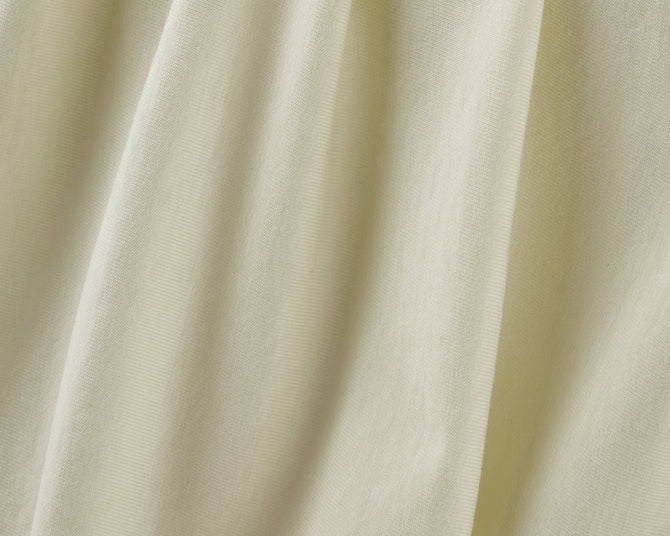



Double knit fabric is a type of knitted fabric made using two sets of needles to create interconnected knit structures. Compared with conventional single jersey, double knits often have a fuller hand feel, greater structural stability, and better resistance to edge curling.
One of the defining advantages of double knit fabric is its ability to balance comfort with structure. Depending on the construction, it can feel smooth and flexible or substantial and supportive, making it suitable for everything from everyday T-shirts and fitted dresses to structured sweatshirts, trousers, and casual jackets.
Double knit is not a single fabric with fixed properties. It includes different constructions, such as interlock, ponte, and double-knit jacquard, each offering distinct characteristics in texture, stretch, drape, and shape retention.
Key Characteristics of Double Knit Fabric
Structure and Dimensional Stability
Double knit fabrics generally provide more body and structural stability than comparable single jersey fabrics. Their interconnected loop structures can help the fabric maintain a more consistent shape during cutting, sewing, and wear.
This stability is especially valuable for garments that require clean lines and a defined silhouette. For example, a structured double knit can help a boxy sweatshirt maintain its shape, while a softer interlock can provide a smooth appearance for fitted tops.
Dimensional stability also depends on fiber composition, knitting density, and finishing, so shrinkage performance should be evaluated for each fabric.
Stretch and Recovery
Double knit fabrics can offer comfortable stretch while maintaining a relatively stable structure. However, their stretch characteristics vary considerably between constructions.
Interlock fabrics often provide moderate mechanical stretch, while double knits incorporating elastane can offer greater stretch and improved recovery.
For fitted garments, stretch recovery is particularly important. A fabric that stretches comfortably but does not recover sufficiently may lose its intended fit around the elbows, knees, or other frequently stretched areas.
Surface Texture and Hand Feel
Many double knits have smooth, refined surfaces, particularly interlock and ponte constructions. Others feature raised patterns, geometric textures, or more pronounced surface details.
Fiber selection also plays an important role in hand feel:
- Cotton Double Knit: Offers a familiar, soft cotton touch, suitable for comfortable everyday clothing.
- TENCEL™ Lyocell Blends: Can introduce a smoother hand feel and more fluid drape, particularly in lighter interlock constructions.
- Merino Wool Blends: Add natural softness and gentle warmth, creating options for premium tops and transitional clothing.
- Polyester and Cotton Blends: Can provide a fuller, more structured feel, making them appealing for sweatshirts, casual trousers, and coordinated sets.
These combinations allow brands to develop different fabric styles within the same broad construction category.
Reduced Edge Curling
Unlike single jersey, which commonly curls at cut edges, many double-knit constructions offer better edge stability.
This can make fabric handling easier during cutting and garment assembly, particularly when working with larger pattern pieces or clean, structured silhouettes.
However, edge stability does not eliminate the need for appropriate seam finishing, which still depends on the garment's construction.
Common Types of Double Knit Fabric
Different double-knit constructions offer different advantages. Understanding these variations helps designers choose fabrics based on the intended garment rather than relying on the general term "double knit."
Interlock Knit
Interlock typically has a smooth surface on both sides and a relatively stable, balanced appearance. It can be developed in lighter or heavier weights depending on the yarn and knitting specifications.
Lightweight interlock fabrics are particularly appealing for premium T-shirts, fitted tops, dresses, and comfortable layering pieces.
For example, a TENCEL™ Lyocell and Merino wool interlock can combine a smooth, refined surface with soft drape, offering an alternative to conventional cotton jersey for elevated everyday essentials.
Ponte Knit
Ponte, often called Ponte di Roma, is a compact double-knit construction known for its relatively firm hand feel, stretch, and ability to support clean silhouettes.
It is widely used for fitted dresses, tailored-looking knit trousers, skirts, and comfortable blazers.
Compared with softer interlock fabrics, ponte often provides a more substantial feel, making it particularly useful when designers want the comfort of knit fabric with a more polished, structured appearance.
Textured and Jacquard Double Knits
Double-knit jacquard and other textured constructions introduce visual interest through the knitting structure itself.
Depending on the design, these fabrics can feature subtle geometric patterns, raised textures, or contrasting surface effects.
They are especially useful for brands developing sweatshirts, contemporary casualwear, and coordinated sets where fabric texture contributes to the garment's identity without requiring additional prints or embellishments.
Apparel Applications: Choosing the Right Double Knit
The versatility of double knit fabric comes from the range of structures, weights, and fiber combinations available.
- T-Shirts and Fitted Tops: Lighter interlock fabrics can provide smooth surfaces, comfortable stretch, and a more substantial appearance than lightweight single jersey. Lyocell and wool blends offer additional possibilities for refined hand feel and drape.
- Dresses and Skirts: Interlock and ponte constructions offer different balances of softness, stretch, and structure. Softer fabrics suit flowing silhouettes, while denser constructions can help maintain more defined shapes.
- Sweatshirts and Casual Sets: Medium- to heavyweight double knits can create fuller, more structured silhouettes. Cotton-polyester blends and textured constructions are particularly useful for modern boxy sweatshirts and coordinated casualwear.
- Trousers and Jackets: Denser double knits can provide the body needed for straight-leg trousers, relaxed jackets, and soft tailoring while retaining the flexibility associated with knitted fabrics.
These applications illustrate why fabric weight alone does not determine suitability. Two double knits with similar GSM values can behave differently because of their yarns, knitting structures, and finishing treatments.
How to Choose the Right Double Knit Fabric
For apparel brands and product developers, choosing double knit fabric starts with the intended garment.
A fitted everyday top may benefit from a softer, lighter interlock with comfortable stretch. A structured sweatshirt may require a fuller double knit with greater body. For trousers or tailored-looking dresses, a denser construction with suitable stretch recovery may be more appropriate.
Beyond appearance and hand feel, important development considerations include fabric weight, thickness, stretch and recovery, opacity, dimensional stability, and performance after washing.
The goal is to find the right balance between softness, structure, stretch, and silhouette.
Double knit fabric offers considerable design flexibility, from smooth, comfortable essentials to contemporary garments with more defined shapes. By selecting the right construction and fiber combination, brands can develop knitted apparel that feels comfortable while delivering the visual character and structure their collections require.
FAQ
What makes double knit fabric different from single knit fabrics like jersey?
Double knit fabric is constructed with two sets of needles that create two interlocked fabric layers, resulting in superior dimensional stability, balanced two-way stretch (15–25% in both length and width), and no edge curling. In contrast, single knits like jersey curl at the edges, stretch predominantly crosswise, and are prone to distortion and bagging over time—making double knits far more reliable for precision-fit, structured knitwear.
Is double knit fabric suitable for tailored garments like blazers or pencil skirts?
Yes—double knit excels in tailored knit applications due to its gentle structure, excellent recovery, and minimal bias stretch. It holds clean lines and sharp silhouettes (e.g., waistband definition in skirts or shoulder shape in blazers) while offering comfortable, functional stretch—bridging the gap between woven tailoring and knitwear performance.
Does double knit fabric require special finishing on cut edges?
No—unlike many single knits, double knit has a self-finished edge that resists curling and fraying. This eliminates the need for serging, binding, or folding edges in many cases, reducing production time, labor costs, and fabric waste—especially beneficial for high-volume or sustainable manufacturing.
Can double knit fabric be made sustainably, and what fiber options support eco-conscious production?
Absolutely. While performance-oriented double knits often use polyester or nylon, the fabric construction readily accommodates sustainable fibers—including TENCEL™, organic cotton, recycled polyester, and wool blends. The key is selecting certified, traceable yarns; the double knit structure itself enhances durability and longevity, aligning with circular fashion goals.
How does double knit perform in activewear or hybrid lifestyle categories?
Double knit offers an ideal balance for modern activewear and athleisure: its controlled stretch supports mobility without sacrificing shape retention, its stable drape ensures flattering fit during movement, and its surface versatility allows for moisture-wicking finishes, brushing, or lamination. Mid- to heavyweight versions (260–320 gsm) are especially effective for leggings, structured joggers, and performance outer layers.
Related Blogs
Add a short description for your brand news

Nylon vs Polyester for Stretch Knit Fabrics: Which Performs Better in Modern Knitwear?

Knit Structures Used in Athleisure Fabrics: A Guide for Performance & Fabric Development

Blended Knit vs 100% Cotton: Why Engineered Structures Win in Modern Apparel