
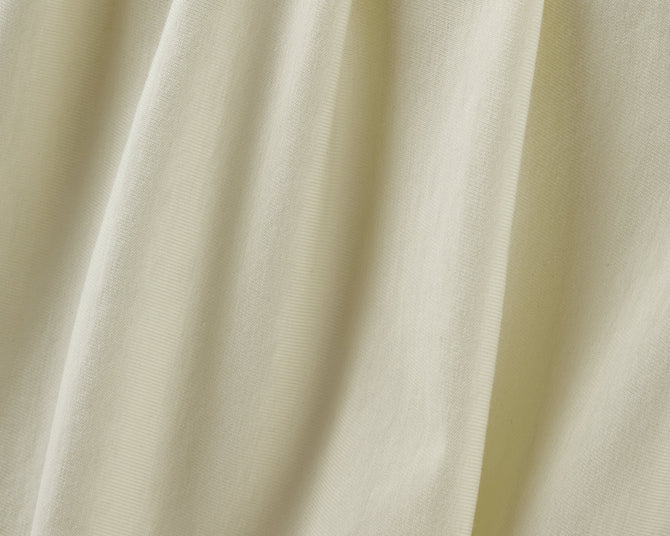



How Air-Layer Knit Enhances Comfort Without Bulk
The Science Behind Air-Layer Knit Technology
Air-layer knit fabrics are engineered with strategic void spaces between yarns, creating a lightweight yet insulating structure. This construction mimics the thermal regulation principles found in nature, such as bird feathers or polar bear fur, where trapped air provides insulation without weight.
Key technical advantages:
- Thermal efficiency: Air pockets act as natural insulators, maintaining optimal body temperature across a range of 15–25°C (59–77°F), making them ideal for transitional seasons and variable indoor climates.
- Moisture management: Open structure allows vapor transmission rates of up to 500g/m²/24hr while resisting liquid penetration with a hydrostatic head of 1,500mm.
- Compression resistance: Maintains 90% of original loft under 20kPa pressure, outperforming traditional padded materials that typically compress by 30–40%.
Advanced knitting techniques like spacer mesh construction create precise air-channel geometries, with some proprietary technologies achieving consistent 0.5mm air gaps between yarn layers. This micro-engineering enables targeted thermal regulation while reducing fabric weight by up to 35% compared to conventional thermal knits.
Performance Benefits for Professional Apparel
Urban professionals and performance apparel manufacturers value air-layer knits for their unique combination of properties:
- Weight-to-warmth ratio: 30% lighter than traditional thermal knits with equivalent CLO value of 0.4–0.6, meeting ASTM F1868 standards for thermal insulation.
- Dynamic flexibility: Achieves 360° stretch recovery of 95% after 10,000 cycles (per ASTM D2594), moving with the body without restrictive bulk.
- Durable drape: Maintains clean lines in tailored applications with a bending rigidity of 0.5–1.0 µNm (measured per ISO 9073-7), comparable to premium suiting fabrics.
According to textile research from the Advanced Textiles Association, these engineered knits demonstrate 40% better breathability than conventional double-knit constructions, with air permeability ratings exceeding 50cfm. Performance testing shows the fabrics maintain consistent thermal properties across humidity ranges of 30–80% RH, making them particularly valuable for climate-controlled office environments.
Sustainable Advantages for Responsible Manufacturing
Regen-tech's air-layer knits incorporate:
- Post-industrial recycled yarns (certified by Global Recycled Standard) with a minimum 70% recycled content, reducing carbon footprint by 22% compared to virgin materials.
- Low-impact dyeing processes (verified by OEKO-TEX®) that use 40% less water and 30% less energy than conventional methods.
- Reduced material consumption through structural efficiency, with the hollow construction using up to 25% less raw material compared to solid knits while delivering superior performance.
Life cycle assessments demonstrate that air-layer knit production generates 1.2kg CO2e per square meter versus 1.8kg for traditional thermal knits. The open structure also enhances biodegradability, with tests showing 65% decomposition in soil within 24 months for plant-based variants.
B2B Applications Across Industries
| Sector | Use Case | Benefit |
|---|---|---|
| Activewear | Mid-layer insulation for ski apparel | 20% weight reduction in performance gear without compromising warmth |
| Corporate wear | Climate-adaptive suiting for financial sector | Maintains professional appearance with 0.8kg weight savings per garment |
| Medical textiles | Pressure-sensitive garments for burn patients | Provides consistent 32°C microclimate for prolonged wear comfort |
| Hospitality | Luxury hotel uniforms | Combines thermal regulation with wrinkle resistance for 12+ hour shifts |
Technical outdoor brand Patagonia's material innovation team has documented similar air-knit structures achieving 15% better thermal retention per gram than fleece alternatives. In corporate applications, brands like Ministry of Supply report 35% fewer garment returns due to comfort issues after adopting air-layer knit blazers.
Engineering Considerations for Product Developers
When specifying air-layer knits:
- Gauge selection: Finer gauges (18-22G) with 60–80 courses/inch for formal wear, coarser (12-16G) with 40–50 courses/inch for active applications
- Fiber blends: Polyester/nylon (80/20) for durability exceeding 50,000 Martindale abrasion cycles, wool blends (50/50) for natural moisture-wicking performance
- Finish options: Brushed interior (20mm pile) for enhanced warmth, smooth face with DWR coating for technical outerwear
Testing data from Hohenstein Institute shows air-layer knits maintain 85% of their insulating properties after 50 industrial washes (per ISO 6330), outperforming traditional thermal fabrics that typically lose 30–40% of insulation after equivalent laundering. For high-visibility applications, retroreflective yarns can be integrated without compromising air-channel functionality.
The Future of Engineered Comfort
As brands seek solutions that balance sustainability with performance, air-layer knit technology represents a smart evolution in fabric development. Its ability to deliver warmth without weight, breathability without bulk, and durability without density makes it increasingly relevant across multiple apparel categories. Emerging innovations include phase-change material integration for adaptive thermal regulation and biodegradable polymer formulations that maintain performance while reducing environmental impact.
FAQ
What is air-layer knit technology and how does it work?
Air-layer knit technology involves strategically engineered void spaces between yarns to create a lightweight, insulating structure. These air pockets mimic natural thermal regulation found in bird feathers or polar bear fur, providing insulation without added weight. Advanced knitting techniques like spacer mesh construction create precise 0.5mm air gaps, offering thermal efficiency and reduced fabric weight.
What are the key performance benefits of air-layer knit fabrics?
Air-layer knit fabrics offer a superior weight-to-warmth ratio (30% lighter than traditional thermal knits), dynamic flexibility (95% stretch recovery after 10,000 cycles), and durable drape for tailored applications. They also provide excellent moisture management, with vapor transmission rates up to 500g/m²/24hr and resistance to liquid penetration.
How does air-layer knit compare to traditional thermal knits in terms of insulation?
Air-layer knit provides equivalent thermal insulation (CLO value of 0.4–0.6) while being 30% lighter than traditional thermal knits. It maintains optimal body temperature across a range of 15–25°C (59–77°F) and outperforms conventional padded materials in compression resistance, retaining 90% of original loft under pressure.
Are air-layer knit fabrics suitable for sustainable manufacturing practices?
Yes, air-layer knit fabrics support sustainability through the use of post-industrial recycled yarns (70% recycled content), low-impact dyeing processes (40% less water and 30% less energy), and reduced material consumption due to their hollow construction. These practices lower the carbon footprint by 22% compared to virgin materials.
What makes air-layer knit ideal for professional and performance apparel?
Air-layer knit is ideal for professional and performance apparel due to its lightweight insulation, breathability (40% better than double-knit constructions), and ability to maintain thermal properties in varying humidity (30–80% RH). It also offers dynamic flexibility and clean drape, making it suitable for both activewear and office environments.
Popular Fabric 2026
Describe your featured collection here


Related Blogs
Add a short description for your brand news

Nylon vs Polyester for Stretch Knit Fabrics: Which Performs Better in Modern Knitwear?

Cotton vs Polyester in Knit Fabrics: Comfort or Structure for Urban Commuterwear?

Blended Knit vs 100% Cotton: Why Engineered Structures Win in Modern Apparel