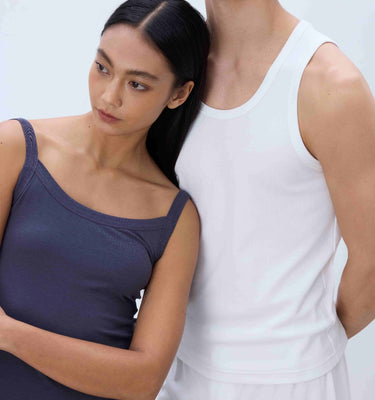
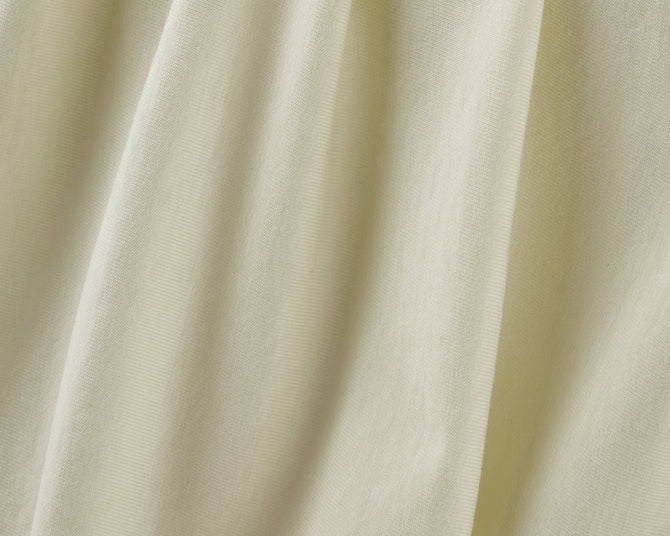



Cotton-lyocell and cotton-viscose knit fabrics offer two appealing ways to move beyond conventional cotton. Both combine cotton's familiar, comfortable hand feel with the softness and fluidity of regenerated cellulose fibers. Yet the choice between lyocell and viscose can influence how a fabric feels, drapes, and performs in finished garments.
Cotton-viscose blends are often favored for their supple softness, flowing drape, and accessible material costs. Cotton-lyocell blends offer similarly comfortable qualities, with lyocell's higher fiber strength creating additional possibilities for refined, durable knit fabrics.
Neither is automatically better. The right choice depends on the intended garment, yarn design, knit construction, and desired aesthetic.
What Makes Cotton-Lyocell Different from Cotton-Viscose?
Both lyocell and viscose are regenerated cellulose fibers, but they are produced through different manufacturing processes and have distinct physical properties.
-
Cotton-Viscose: Conventional viscose is known for its soft, flexible hand feel and attractive drape. Blending it with cotton can create comfortable fabrics that feel less traditionally cotton-like and more fluid, making them attractive for everyday tops, casual dresses, and loungewear.
-
Cotton-Lyocell: Lyocell is produced through a solvent-spinning process and generally has higher dry and wet fiber strength than conventional viscose. It contributes a smooth, soft touch and natural drape, while offering opportunities to develop fabrics with different levels of body, surface refinement, and durability.
-
The Role of Cotton: Cotton adds its recognizable natural hand feel, moisture absorbency, and potential for a more substantial fabric character. Its contribution varies with the blend ratio, yarn specifications, and finishing.
The comparison here focuses on conventional viscose rather than modal, which is another regenerated cellulose fiber with different strength characteristics.
Comparing Hand Feel, Drape, and Fabric Appearance
| Property | Cotton-Viscose | Cotton-Lyocell |
|---|---|---|
| Hand feel | Often soft, supple, and fluid | Smooth, soft, with potential for a more substantial touch |
| Drape | Frequently flowing and relaxed | Fluid or more controlled, depending on construction |
| Surface appearance | Can be smooth, softly lustrous, or matte | Can offer a clean surface or distinctive yarn texture |
| Fiber strength | Conventional viscose has relatively low wet strength | Lyocell generally retains greater strength when wet |
| Material positioning | Often suitable for cost-conscious, comfort-focused collections | Attractive for material differentiation and premium everyday fabrics |
These are general material tendencies rather than fixed outcomes for every blend.
Softness: Supple Comfort vs Smooth Refinement
Cotton-viscose fabrics often appeal to designers looking for a particularly supple, relaxed touch.
Viscose can soften the familiar cotton hand feel and create a fabric that moves easily against the body. This makes it appealing for lightweight tops, comfortable layering pieces, and garments designed around softness.
Cotton-lyocell can deliver equally appealing next-to-skin comfort, often with a smooth, refined surface. Depending on the yarn and finishing, the result may feel fluid and silky or more substantial and softly structured.
Importantly, a cotton-lyocell knit is not necessarily softer than a cotton-viscose knit. A carefully developed viscose blend may offer a more appealing hand feel for a particular garment.
Drape: How the Fabric Shapes the Silhouette
Drape is especially important when developing T-shirts, dresses, and relaxed everyday clothing.
Cotton-viscose blends are commonly associated with soft, flowing silhouettes. Their fluid character can complement relaxed tops, draped dresses, and comfortable loungewear.
Cotton-lyocell blends can also produce beautiful, flowing garments. However, by adjusting yarn design, knit density, and finishing, manufacturers can develop versions with greater body or a more defined surface character.
For example, a lightweight cotton-lyocell jersey may suit a softly draped T-shirt, while a more substantial textured cotton-lyocell knit can create a relaxed silhouette with greater visual structure.
The distinction is not simply which fiber drapes more. It is how the finished fabric balances fluidity with the intended garment shape.
Strength, Moisture, and Everyday Wear
Both cotton-viscose and cotton-lyocell are moisture-absorbent, making them relevant to comfortable everyday clothing. However, absorbency alone does not establish faster drying or superior sweat management.
One meaningful difference lies in fiber strength.
Conventional viscose loses a significant proportion of its strength when wet, whereas lyocell generally retains much more of its strength. This can be valuable when developing fabrics intended for regular use and laundering.
However, higher fiber strength does not automatically guarantee better abrasion resistance, lower pilling, or less shrinkage in finished fabrics.
Research comparing viscose and lyocell rib knits has demonstrated that different yarns and processing conditions can lead to different outcomes. Lyocell can also be susceptible to surface fibrillation, making suitable fiber selection and finishing important.
For apparel brands, the practical consideration is how the actual fabric maintains its appearance, dimensions, and hand feel after washing—not simply which fiber has the higher laboratory strength.
Which Blend Works Better for Different Garments?
Everyday T-Shirts and Premium Basics
Both blends can work well for T-shirts.
Cotton-viscose is an attractive option for soft, comfortable essentials with a relaxed appearance. Cotton-lyocell may be particularly interesting when a brand wants to introduce a distinctive material story, smooth surface, or carefully engineered texture into a simple T-shirt design.
For premium basics, small differences in surface cleanliness, hand feel, and drape can significantly influence the perceived quality of a finished garment.
Fitted Rib Tops and Layering Pieces
For fitted tops, the knit construction and elastane content often matter more to stretch and recovery than the choice between viscose and lyocell.
A cotton-viscose rib knit containing elastane can offer comfortable stretch and a close fit. Cotton-lyocell rib fabrics can serve similar applications when engineered with suitable stretch and recovery.
Designers should therefore evaluate the complete construction rather than expecting either regenerated cellulose fiber to provide elastane-like recovery.
Relaxed Dresses and Contemporary Casualwear
Cotton-viscose can be appealing for garments where soft drape and easy movement define the design.
Cotton-lyocell offers another route, particularly when designers want to combine fluidity with a distinctive surface texture or a more substantial hand feel.
For contemporary casualwear, these differences can help distinguish a flowing, relaxed style from a garment with a more intentional silhouette.
Beyond Fiber Composition: The Importance of Yarn Development
A meaningful comparison should go beyond the fiber content label.
At Regen-tech Fashion, cotton-viscose and cotton-lyocell represent different approaches to material development.
Our RC knit fabrics combine EcoCosy® viscose, combed cotton, and elastane, with options including rib constructions and slub textures. These fabrics are developed around soft comfort, stretch, and versatile everyday applications.
Our cotton-lyocell developments explore another direction. By combining cotton and lyocell with specialized yarn engineering, certain fabrics feature subtle granular textures, a fuller hand feel, and structure suited to casual T-shirts, tops, and lightweight outer layers.
This illustrates an important point: changing the fiber blend creates new possibilities, but yarn design and knit construction turn those possibilities into distinctive fabrics.
How to Choose Between Cotton-Lyocell and Cotton-Viscose
When comparing samples, apparel designers and fabric developers should focus on a few practical questions:
-
What should the garment feel like? Prioritize supple softness, a smooth touch, or a more substantial hand feel.
-
How should it drape? Consider whether the design needs flowing movement or a more defined silhouette.
-
What construction suits the fit? Compare jersey, rib, and double-knit options based on the desired stretch, texture, and body.
-
How does the fabric perform after washing? Evaluate dimensional stability, pilling, surface appearance, and hand-feel changes.
-
Does the material fit the collection's positioning? Consider fabric cost, available yarn options, and the value of material differentiation.
Where possible, compare fabrics with similar weights, constructions, and cotton proportions to better understand the effect of the regenerated cellulose component.
Final Thoughts
Cotton-viscose remains a compelling choice for soft, fluid, comfortable knit fabrics. Cotton-lyocell provides a different combination of smoothness, fiber strength, and material development possibilities.
Rather than treating lyocell as a universal replacement for viscose, designers can use both blends to create distinct garment experiences.
The best fabric is ultimately the one that delivers the right hand feel, drape, appearance, and everyday performance for the intended collection.