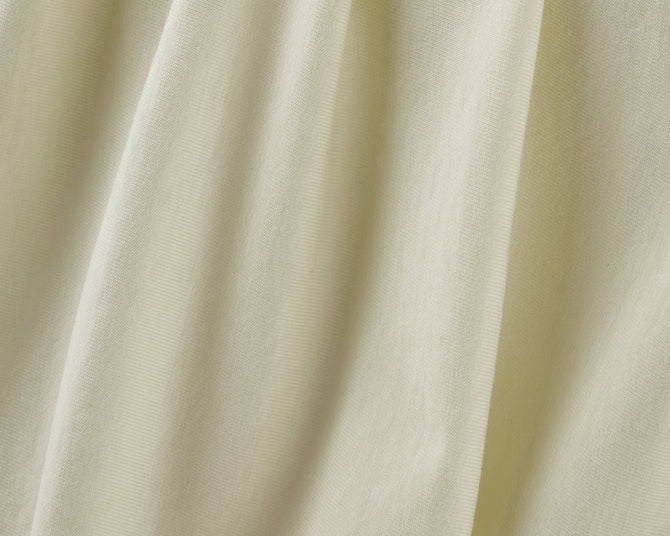



Not all cotton knit fabrics need a perfectly smooth surface or a uniform color. For apparel designers, subtle variations in yarn texture and color can give even a simple T-shirt a distinctive character.
Two popular approaches are slub cotton and mélange cotton. Slub creates irregular texture through variations in yarn thickness, while mélange introduces visual depth by combining fibers of different colors within the yarn.
These effects are not mutually exclusive. A cotton knit fabric can feature both slub texture and mélange coloring, creating a surface that feels natural and looks visually layered.
Understanding how each effect works helps designers choose fabrics that complement their intended garment style, from understated premium basics to expressive casualwear.
What Is Slub Cotton Knit Fabric?
Slub cotton knit fabric is made using yarns with intentional variations in thickness. During spinning, sections of the yarn are made thicker than others, creating irregularities that become visible when the yarn is knitted into fabric.
The result is a surface with subtle streaks, uneven lines, or small textured areas rather than a completely uniform appearance.
Slub effects can vary considerably. Fine, closely spaced slubs produce a restrained texture that is noticeable mainly at close range, while more pronounced variations create a stronger, rustic character.
The main appeal of slub cotton is its organic texture. It adds visual interest without requiring elaborate knit patterns, prints, or multiple colors.
This makes slub cotton particularly appealing for:
-
Relaxed and oversized T-shirts with a naturally textured surface.
-
Vintage-inspired casualwear and everyday essentials.
-
Linen-look cotton knits with a subtle, irregular appearance.
-
Minimalist garments where fabric texture becomes part of the design.
Importantly, slub does not automatically mean rough or uncomfortable. The hand feel depends on the yarn, cotton quality, knitting construction, and finishing process. A finely developed slub jersey can remain soft and comfortable against the skin.
What Is Mélange Cotton Knit Fabric?
Mélange cotton knit fabric emphasizes color variation rather than yarn thickness.
A common production method involves blending cotton fibers of different colors before spinning them into yarn. Instead of creating a completely uniform shade, the yarn contains subtle variations that appear as fine flecks or blended tones across the knitted surface.
Heather grey is a familiar example, but mélange effects extend far beyond grey. Blending different fiber colors can produce nuanced beige, blue, green, pink, and other shades.
The visual character depends on the selected colors, their proportions, and how thoroughly the fibers are blended.
Some mélange fabrics have very fine, understated color variations. Others use stronger contrast to create a more noticeable multicolored appearance.
The main appeal of mélange cotton is color depth. It gives simple knit fabrics a more layered appearance without relying on printed patterns.
For apparel brands, this works particularly well in:
-
Premium everyday T-shirts and elevated basics.
-
Minimalist tops where subtle color variation adds interest.
-
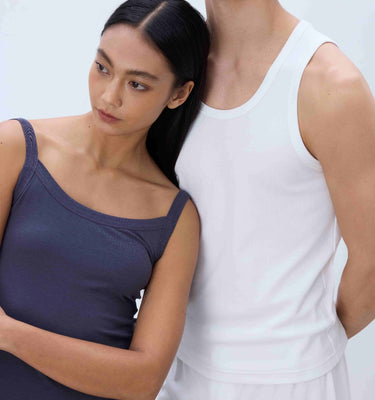
Cotton rib knits for fitted tops, tanks, and dresses.
-
Coordinated casualwear collections built around soft, nuanced colors.
Mélange is primarily a color effect, not a guarantee of softness, stretch, or durability. These properties still depend on the fiber composition, yarn construction, knit structure, and finishing.
Slub vs Mélange Cotton: Key Differences
| Feature | Slub Cotton Knit | Mélange Cotton Knit |
|---|---|---|
| Main characteristic | Irregular surface texture | Blended color variation |
| How it is created | Intentional changes in yarn thickness | Mixing differently colored fibers, commonly before spinning |
| Close-up appearance | Thick-and-thin details, subtle streaks | Fine color flecks and tonal variations |
| Appearance from a distance | Natural, slightly irregular texture | A more unified shade with visual depth |
| Design character | Organic, relaxed, textured | Refined, understated, color-rich |
| Can they be combined? | Yes | Yes |
Neither effect is inherently better. They simply offer different ways to make a cotton knit fabric visually distinctive.
How Do They Look Different Up Close and from a Distance?
One of the most useful ways to compare slub and mélange fabrics is to examine them at different viewing distances.
Up close: texture versus color
With slub cotton, attention is drawn to the yarn structure. Small changes in thickness create irregular lines or raised details that may become more visible under angled lighting.
With mélange cotton, the yarn may appear relatively even in thickness, but individual color variations become apparent. The viewer notices how different shades blend across the surface.
From a distance: character versus tonal depth
At normal viewing distance, individual slubs may become less noticeable, leaving an overall impression of natural texture. Depending on their size and distribution, more prominent slubs may remain visible across the garment.
Mélange colors often merge into a more unified shade. The fabric can look almost solid from a distance while retaining subtle color complexity when viewed closely.
This distinction matters for minimalist garments. A simple T-shirt with few design details can communicate different styles depending on whether the fabric emphasizes surface irregularity or refined color variation.
Which Effect Works Better for Different Apparel Styles?
The choice becomes easier when it starts with the intended garment rather than the yarn terminology.
For natural, relaxed casualwear: consider slub cotton.
Slub textures introduce a slightly irregular, lived-in quality. They work particularly well with relaxed fits, washed colors, and casual silhouettes where a perfectly smooth surface is not essential.
For refined everyday essentials: consider mélange cotton.
Fine mélange effects can bring subtle visual richness to otherwise simple designs. They are particularly suitable for clean silhouettes, understated colors, and garments where designers want color depth without obvious patterns.
For more expressive cotton fabrics: combine both effects.
A multicolored slub yarn can bring together irregular texture and layered color. The result may feel more distinctive than either a conventional slub or a fine mélange fabric alone.
This combination is especially interesting for casual T-shirts, contemporary streetwear, and fashion collections that place emphasis on material character.
Combining Slub and Mélange Effects in Cotton Knit Development
The distinction between slub and mélange is also useful when developing new fabrics.
At Regen-tech Fashion, different cotton yarn approaches illustrate how these effects can be applied.
Our 6621 and 6622 color-spun cotton knit developments focus on fine mélange textures, using color-spun yarns to create subtle visual depth in rib and jersey constructions.
Another approach is represented by 6592, a 100% cotton, 150 gsm single jersey. It combines multicolored yarn development with slub spinning to produce a surface that features both irregular texture and nuanced color.
These examples show that slub and mélange are not necessarily competing fabric categories. They are design elements that can be developed individually or together, depending on the desired appearance.
How to Evaluate Slub and Mélange Cotton Fabric Swatches
Photographs can help with initial fabric selection, but physical swatches reveal details that may not be obvious on screen.
When comparing options, designers and material developers should consider four practical points:
-
Examine the fabric at different distances. Look closely at individual yarn details, then step back to see how the texture or color reads as a larger surface. An effect that looks prominent in a macro photograph may appear much more subtle on a finished garment.
-
Compare under consistent lighting. Angled lighting can reveal slub irregularities, while consistent neutral lighting makes it easier to judge mélange color balance. Compare samples under the same conditions.
-
Evaluate hand feel and drape. A textured appearance does not necessarily mean a coarse hand feel. Similarly, a fine mélange fabric can have different levels of softness, stretch, and body depending on its construction. Handle and drape the fabric rather than judging it only by appearance.
-
Consider the intended garment and production requirements. Examine how the fabric looks across a larger panel or sample garment. For production, confirm the acceptable degree of slub variation, color consistency between batches, and relevant wash performance.
The goal is not simply to find the most visually interesting fabric, but to select an effect that remains attractive and appropriate in the finished garment.
Final Thoughts
Slub and mélange cotton knit fabrics offer two different approaches to textile design. Slub emphasizes the character of the yarn through irregular texture, while mélange brings depth and subtle variation to the fabric's color.
For apparel brands, both can transform a familiar cotton T-shirt or everyday top into something more distinctive without relying on complex prints or garment details.
The most interesting possibilities often come from understanding how yarn texture, color blending, and knit construction work together.
Explore Regen-tech Fashion's textured and color-spun cotton knit fabrics to find the right balance of natural texture, color depth, and design character for your next collection.