
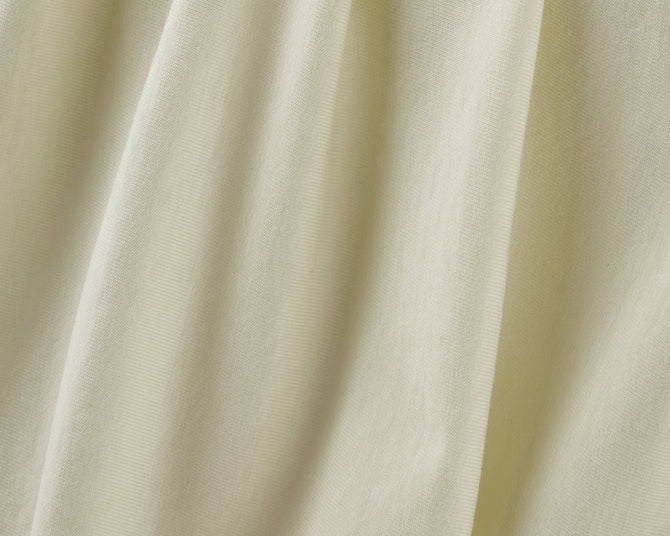



Cotton and lyocell are two popular choices for modern knit tops, but they bring different qualities to the finished garment.
Cotton is known for its familiar softness, natural feel, and versatility. Lyocell, often available under the TENCEL™ brand, offers a smoother touch, fluid drape, and excellent moisture absorption. Both can be used to create comfortable everyday clothing, yet the differences become more noticeable when developing fitted T-shirts, tank tops, and lightweight long-sleeve layers.
For apparel brands, the decision involves more than choosing between two fibers. Knit construction, fabric weight, elastane content, and finishing all influence how a top stretches, fits, and retains its shape.
Understanding these factors helps designers select fabrics that deliver the intended balance of comfort, appearance, and performance.
Cotton vs Lyocell: Key Fabric Differences
Cotton is a natural cellulose fiber obtained from the cotton plant. In knitted fabrics, it is valued for its soft, familiar hand feel, often matte appearance, and versatility across different yarn counts and constructions.
Lyocell is a regenerated cellulose fiber produced from wood pulp through a solvent-spinning process. It is particularly valued for its smooth surface, soft touch, moisture absorption, and elegant drape. Depending on the yarn and finishing, lyocell knits can also offer a subtle sheen and a cool, comfortable sensation against the skin.
Both fibers are well suited to next-to-skin clothing, but their characteristics can create different visual and tactile results.
| Characteristic | Cotton Knit Fabrics | Lyocell Knit Fabrics |
|---|---|---|
| Hand Feel | Familiar softness, often with a natural, slightly dry cotton touch | Smooth, silky, and supple, often with a cool-touch sensation |
| Surface Appearance | Usually matte, with a casual or structured appearance | Often smoother, with a refined surface and subtle luster |
| Drape | Can provide body and a more defined silhouette, depending on construction | Typically more fluid, creating soft, body-skimming silhouettes |
| Moisture Comfort | Absorbent and breathable; can retain moisture when wet | Excellent moisture absorption and regulation, supporting next-to-skin comfort |
| Stretch & Recovery | Mechanical stretch from knit structure; elastane improves recovery | Mechanical stretch from knit structure; elastane improves recovery |
| Shape Retention | Depends on yarn, fabric density, construction, and finishing | Depends on yarn, fabric density, construction, and finishing |
| Pilling & Surface Durability | Influenced by yarn quality, fiber length, and finishing | Influenced by fiber grade, fibrillation behavior, yarn quality, and finishing |
Neither fiber is universally superior. Cotton often appeals to brands seeking a recognizable everyday texture, while lyocell offers opportunities to create softer, more fluid, and refined knit tops.
Hand Feel and Drape: How They Change the Look of a Top
One of the clearest differences between cotton and lyocell is how the fabric feels and falls on the body.
Cotton knits can offer a soft yet substantial hand feel. Depending on yarn selection, stitch density, and finishing, they can range from lightweight, relaxed jersey to compact fabrics with enough body for a clean, structured silhouette.
This versatility makes cotton particularly suitable for classic T-shirts, fitted basics, and casual tops where a natural matte appearance is part of the design.
Lyocell knits, meanwhile, are often chosen for their smoother, more fluid character. Their soft drape can follow the body's contours without creating an overly rigid appearance.
For slim-fitting tops, lightweight layering pieces, and refined everyday essentials, this creates an appealing combination of softness and visual elegance.
However, fluid drape should not be confused with shape retention. A soft lyocell jersey may fall beautifully but still require careful construction to prevent unwanted stretching or distortion during wear.
The desired garment silhouette should guide the choice of fabric, rather than fiber content alone.
Stretch and Shape Retention: Why Knit Construction Matters
For fitted tops, tank tops, and long-sleeve base layers, stretch and recovery are essential to both comfort and appearance.
Cotton and lyocell fibers have limited inherent elastic recovery compared with elastane. In knitted fabrics, much of the initial stretch comes from the movement and rearrangement of yarn loops.
This is why two fabrics with similar fiber compositions can behave very differently.
Single Jersey: Softness and Flexible Drape
Single jersey is widely used for lightweight T-shirts and layering tops. Its construction provides natural mechanical stretch and a relatively fluid hand feel.
Cotton jersey often creates a familiar casual appearance, while lyocell jersey can produce a softer, more flowing silhouette.
When fitted garments require greater stretch recovery, elastane can be incorporated to improve their ability to return toward their original dimensions after stretching.
Rib Knit: Stretch and Body-Hugging Fit
Rib structures, including 1×1 rib and 2×2 rib, are particularly useful for fitted knit tops.
Their alternating knit and purl stitches create pronounced mechanical stretch, especially across the fabric width. This allows the material to expand comfortably around the body.
Adding elastane can further improve recovery and help reduce unwanted bagging at areas such as the waist, elbows, and neckline.
Cotton rib fabrics can offer a more substantial cotton touch, while lyocell rib fabrics combine the distinctive rib texture with a smoother, more supple hand feel.
Both are suitable for fitted tanks, slim-fit T-shirts, and long-sleeve layering pieces.
Interlock: A Smoother, More Stable Option
Interlock is a double-knit construction known for its smooth surfaces and relatively balanced structure.
Compared with many lightweight single jerseys, interlock fabrics can offer greater body, stability, and coverage, depending on their weight and knitting density.
Cotton interlock works well when a clean, substantial appearance is desired. Lyocell interlock can combine a refined surface and soft drape with the additional stability of a double-knit construction.
For both fibers, elastane content and fabric engineering remain important when developing garments that need reliable stretch recovery.
Which Fabric Works Better for Fitted Tops, Tank Tops, and Long Sleeves?
The most practical way to compare cotton and lyocell is to consider the intended garment.
- Fitted T-Shirts: Cotton/elastane jersey or rib fabrics can provide a familiar soft touch with controlled stretch. Lyocell/elastane alternatives offer a smoother, more fluid appearance, making them appealing for elevated everyday basics.
- Tank Tops and Sleeveless Basics: Cotton rib can create a compact, defined texture, while lyocell rib offers a softer, more supple feel. In both cases, appropriate fabric density and recovery help maintain a comfortable fit around the chest, armholes, and waist.
- Long-Sleeve Layering Tops: Lyocell is particularly attractive for soft, body-skimming layers worn close to the skin. Cotton remains a versatile choice for everyday comfort, especially when a more substantial, familiar hand feel is preferred. Rib structures and elastane blends can help either material maintain a fitted silhouette.
These examples highlight an important distinction: fiber selection shapes the sensory experience, while fabric engineering determines much of the garment's stretch, support, and fit stability.
What About Cotton-Lyocell Blends?
Cotton and lyocell do not always need to compete. Blending the two fibers can create fabrics that combine their respective characteristics.
Cotton can contribute a familiar, slightly drier hand feel and a natural appearance, while lyocell can introduce additional smoothness, softness, and fluidity.
For example, a cotton-lyocell jersey may offer a softer, more refined interpretation of a conventional cotton T-shirt. A cotton-lyocell rib with elastane can combine these tactile qualities with the stretch and recovery needed for fitted tops.
The final result depends on the blend ratio, yarn construction, knit structure, and finishing process.
For brands developing multiple price points or garment silhouettes, cotton, lyocell, and their blends provide a flexible material palette rather than a single solution.
What Should Apparel Brands Evaluate Before Choosing?
Beyond fiber composition, sourcing and development teams should consider how a fabric performs as a finished material.
Stretch recovery, dimensional stability after washing, pilling resistance, and surface appearance are especially relevant for fitted garments that undergo repeated wear and laundering.
For lyocell fabrics, fiber grade and finishing also deserve attention. Specialized options such as TENCEL™ Lyocell A100 are designed to reduce fibrillation, helping maintain a cleaner fabric appearance under suitable processing conditions.
Responsible sourcing is another consideration. Certified organic cotton and traceable, responsibly sourced lyocell can support a brand's material strategy, provided that the relevant product and supply-chain claims are verified.
Ultimately, comparing actual fabric samples in the intended garment construction offers more useful information than relying on fiber characteristics alone.
Cotton or Lyocell: Making the Right Choice
Cotton remains an excellent choice for everyday knit tops, offering familiar softness, a natural aesthetic, and flexibility across different fabric constructions.
Lyocell brings a distinctive combination of silky softness, fluid drape, and moisture comfort, making it especially appealing for refined, next-to-skin garments.
Neither fiber automatically guarantees better stretch recovery or shape retention. Those qualities depend heavily on the fabric's construction, elastane content, and finishing.
For modern apparel development, the strongest approach is to select the fiber for its desired touch and appearance, then engineer the knit structure to deliver the required fit and performance.
Explore our cotton and TENCEL™ Lyocell knit fabrics to find the right combination of softness, drape, stretch, and shape retention for your next collection.
FAQ
Which fabric offers better moisture-wicking performance for active or warm-weather knit tops?
Lyocell outperforms cotton in moisture management: its smooth, uniform fibrils wick sweat rapidly away from the skin and dry faster, maintaining breathability and comfort during activity or in humid conditions — making it ideal for performance-adjacent knits like elevated tees or layering pieces worn in warmer climates.
How do cotton and lyocell knits differ in drape and silhouette retention — especially for fitted or draped designs?
Cotton knits offer moderate drape but tend to relax and lose shape over time, particularly in close-fitting styles. Lyocell provides fluid yet structured drape with superior shape retention due to its higher tensile strength and inherent fiber body — excelling in draped necklines, semi-fitted silhouettes, and pieces where clean lines and longevity of form are critical.
Is lyocell more sustainable than conventional cotton for knit top production?
Yes — lyocell (e.g., TENCEL™) has a significantly lower environmental footprint: it uses up to 95% less water than conventional cotton, relies on rapidly renewable eucalyptus grown without irrigation or pesticides, and is produced via a closed-loop process that recovers >99% of the non-toxic solvent. Conventional cotton, by contrast, is highly water- and land-intensive and often pesticide-dependent.
Which fabric is more resistant to pilling in fine-gauge knit tops, and why?
Lyocell is notably more resistant to pilling than cotton in fine-gauge knits due to its smoother fiber surface, higher tensile strength, and uniform cross-section — all of which reduce surface abrasion and fiber shedding at high-friction zones like underarms and cuffs. Cotton, especially in low-twist, open-knit constructions, is more prone to pilling over time.
Can lyocell be used effectively in low-elastane or elastane-free knit tops, and how does its stretch/recovery compare to cotton?
Yes — lyocell exhibits slightly higher natural elongation and better recovery than cotton alone, allowing for effective use in low-elastane blends (e.g., 97/3 lyocell/spandex) or even elastane-free knits where controlled stretch and shape memory are needed. Cotton, by contrast, has minimal inherent elasticity and typically requires ≥5% spandex for reliable recovery in fitted styles.
Related Blogs
Add a short description for your brand news

Nylon vs Polyester for Stretch Knit Fabrics: Which Performs Better in Modern Knitwear?

Cotton vs Polyester in Knit Fabrics: Comfort or Structure for Urban Commuterwear?

Blended Knit vs 100% Cotton: Why Engineered Structures Win in Modern Apparel