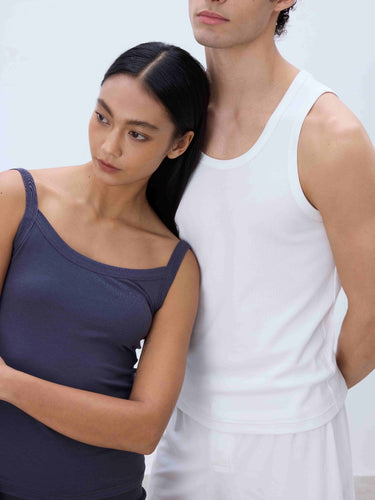




Softness has become an important part of how activewear is designed and experienced. For tops that move between light activity, travel, and everyday wear, brands increasingly want fabrics that feel pleasant against the skin without compromising freedom of movement or practicality.
Lululemon's Soft Jersey collection offers a useful example of this approach. Rather than presenting softness as a purely aesthetic quality, the collection brings together a soft hand feel, stretch, and quick-drying functionality in garments designed for casual wear.
For apparel developers, the interesting question is not simply how to make a fabric softer. It is how to translate that softness into a fabric specification that works for a particular garment.
What Lululemon's Soft Jersey Tells Us About Fabric Comfort
Lululemon's Soft Jersey Short-Sleeve Shirt combines a soft, brushed interior with lightweight stretch and quick-drying properties. Its fabric composition is 88% recycled polyester and 12% elastane.
The product illustrates how a familiar synthetic fiber blend can be developed around a more tactile, comfort-oriented experience.
Polyester is often associated with technical sportswear, but polyester fabrics can have very different surface characteristics depending on yarn selection, knitting construction, and finishing.
A smooth technical jersey, a cotton-like polyester knit, and a fabric with a velvety surface may share the same primary fiber while delivering noticeably different sensations.
This distinction matters for brands developing softer activewear. Fiber composition provides useful information, but it does not fully describe how a fabric will feel against the skin.
Lululemon's example also highlights the importance of positioning. The Soft Jersey line is presented for casual wear, with performance properties supporting everyday comfort rather than defining the garment solely as high-intensity sportswear.
Defining Softness Beyond the Fiber Label
A development brief that simply asks for a "very soft fabric" leaves considerable room for interpretation.
Softness can refer to several different characteristics.
Surface feel: Does the fabric feel smooth and silky, gently brushed, or rich and velvety? These sensations are not interchangeable, even when two fabrics are described as equally soft.
Fabric body: Does the material feel fluid and lightweight, or does it have a fuller, more substantial hand? This influences how it drapes and how the finished garment sits on the body.
Skin contact: For garments worn directly against the skin, the inner surface deserves particular attention. A fabric that feels pleasant when handled may create a different sensation when worn for extended periods.
These distinctions are especially relevant when developing polyester-based alternatives to fabrics associated with softness, such as Modal.
The objective is not necessarily to reproduce every property of Modal. Instead, brands may be looking for a particular tactile quality while retaining the stretch and easy-care characteristics required by their product concept.
A more useful development brief might specify a soft, velvety surface, a lightweight jersey construction, and enough flexibility for unrestricted everyday movement.
That gives fabric suppliers a clearer direction than softness alone.
Stretch and Garment Fit: Why Softness Is Only Part of the Decision
A soft fabric may feel appealing on the sample table, but the experience changes once it becomes a garment.
For activewear tops, stretch needs to work with the intended silhouette and the movements the wearer is likely to make.
A relaxed T-shirt and a close-fitting training top place different demands on the same material. A loose silhouette may rely more on drape and natural movement, while a fitted garment generally needs greater attention to stretch, recovery, and how the fabric behaves around the shoulders and torso.
Four-way stretch allows a fabric to extend in both lengthwise and crosswise directions. In polyester-elastane knits, this flexibility can help accommodate reaching, bending, and other everyday movements.
However, stretch and recovery should not be treated as identical properties.
A fabric may extend comfortably but still need evaluation for how well it returns toward its original dimensions after repeated movement. Recovery, fabric growth, and dimensional stability are therefore worth checking during development.
For brands selecting a soft stretch jersey, useful questions include:
- Does the fabric stretch comfortably in the directions required by the garment?
- Does it return to shape after repeated extension?
- Does the fabric become excessively sheer when stretched?
- Does the finished garment maintain the intended silhouette during movement?
These questions are best answered through fabric evaluation and garment sampling, rather than fiber composition alone.
Quick Drying and Everyday Practicality
Softness and stretch may define the first impression, but everyday wear also places demands on fabric care and drying performance.
For a lightweight top intended for travel, commuting, or light activity, quick-drying properties can add practical value. They are particularly relevant when the garment is expected to move between casual and active settings.
It is important, however, to distinguish quick drying from other moisture-management properties.
A fabric's drying behavior does not automatically establish its ability to transport liquid moisture away from the skin. Absorption, moisture spreading, directional transport, and drying are related but distinct aspects of fabric performance.
Brands should therefore identify which functions matter for the intended garment and request appropriate evaluation when specific performance claims are required.
Repeated laundering also deserves attention. Changes in hand feel, surface appearance, garment dimensions, and stretch behavior can affect whether the fabric continues to deliver the experience originally intended.
For a softness-focused garment, maintaining the desired touch over time is an important development consideration.
CloudSkin 80003: A Soft Stretch Jersey for Everyday Activewear
Regen-tech Fashion's CloudSkin series explores the combination of exceptionally soft hand feel and flexible movement in polyester-based knitted fabrics.
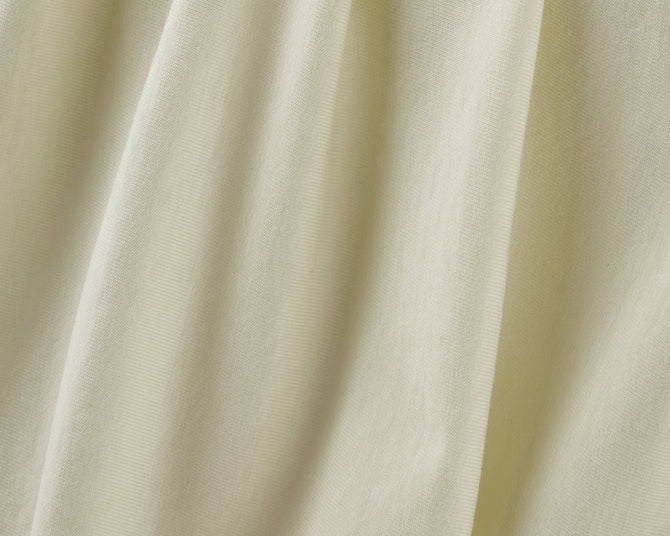
One development option is CloudSkin 80003, a lightweight stretch single jersey with a rich, velvety hand feel.
| Specification | CloudSkin 80003 |
|---|---|
| Composition | 92.8% Polyester / 7.2% Elastane |
| Weight | 140 g/m² |
| Width | 175 cm |
| Construction | Stretch single jersey |
| Key characteristics | Soft, velvety hand feel; four-way stretch; quick drying |
The fabric brings together three characteristics relevant to comfort-oriented activewear tops: a soft surface, flexibility in multiple directions, and quick-drying functionality.
At 140 g/m², it provides a lightweight starting point for developing soft T-shirts, casual active tops, and other garments where a gentle touch and ease of movement are priorities.
Rather than relying on fiber composition alone, CloudSkin focuses on the tactile experience that the finished fabric can offer.
As with any development fabric, the final choice should be evaluated against the garment's fit, opacity requirements, intended activity, and performance specifications.
Choosing a Fabric Around the Wearing Experience
Lululemon's Soft Jersey illustrates how softness can become a defining feature of an everyday apparel product while stretch and practical performance support the overall experience.
For brands developing similar categories, the most useful approach is to begin with the intended garment: how it should feel, how closely it should fit, how it needs to move, and what level of everyday performance is expected.
From there, fiber selection, knit construction, surface characteristics, and finishing can be evaluated together.
Developing a soft stretch activewear collection? Explore Regen-tech Fashion's CloudSkin fabrics or contact our team to request a sample of CloudSkin 80003 for your next development project.