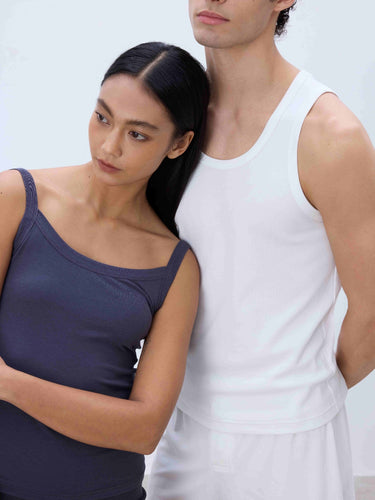
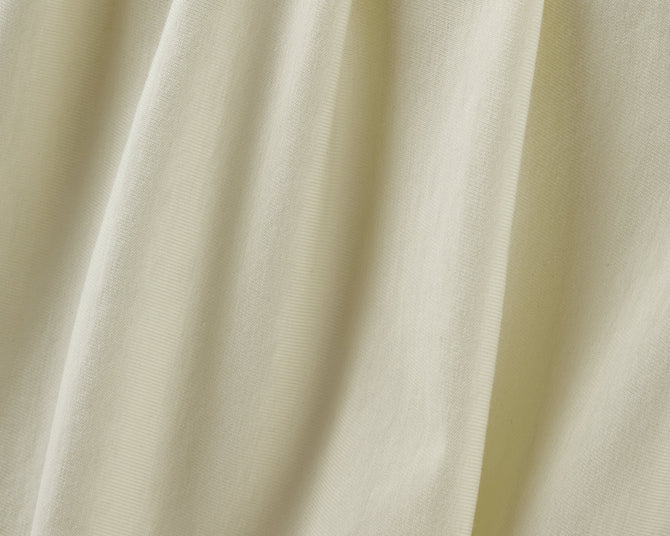




When developing a soft knitted top, both Modal and Lyocell can be strong candidates. The better choice depends less on which fiber is “better” and more on what the garment needs to achieve.
For soft, close-to-skin autumn and winter basics, Modal blends are often worth exploring first. If the priority is a cooler hand feel, good wet strength, or lightweight fabrics blended with materials such as linen or merino wool, Lyocell may offer more suitable development routes.
For garment development, however, fiber is only the starting point. Once a fiber is turned into fabric, yarn type, blend ratio, knit construction, GSM and finishing can have as much influence on the final hand feel and garment performance as the words “Modal” or “Lyocell” on the composition label.
What Is the Difference Between Modal and Lyocell?
Modal and Lyocell are both regenerated cellulosic fibers. The main difference lies in how cellulose from wood pulp is processed and converted into fiber.
Modal is produced using a modified viscose process. Wood pulp is chemically treated to form a soluble cellulose derivative, which is then dissolved, spun, coagulated and stretched into fiber. Through changes in the spinning solution and processing conditions, Modal achieves improved wet-state mechanical properties compared with conventional viscose.
Commercial Lyocell production generally uses NMMO solvent to dissolve cellulose directly. The cellulose is then spun and regenerated into fiber without first converting it into the same type of cellulose derivative used in viscose processing. A high proportion of the solvent can be recovered and reused, which is why Lyocell is frequently associated with closed-loop production systems. Learn more about Lenzing fiber production technologies.
In sourcing, it is also important to distinguish between a fiber category and a brand name.
TENCEL™ is a fiber brand from Lenzing and includes both TENCEL™ Modal and TENCEL™ Lyocell. A supplier describing a fabric simply as “Tencel” therefore does not provide enough information. The actual fiber type, brand, specification and blend ratio should still be confirmed during development. See TENCEL™ fiber information.
Modal vs Lyocell: At a Glance
| Comparison | Modal | Lyocell | What It Means for Knit Development |
|---|---|---|---|
| Production route | Modified viscose process | Direct cellulose dissolution using NMMO | Lyocell production is generally associated with higher solvent recovery |
| Typical hand-feel direction | Soft, smooth and gentle | Smooth, fluid and often cooler to the touch | Final hand feel still depends heavily on yarn, construction and finishing |
| Wet strength | Improved over conventional viscose | Strong wet-strength retention | Higher fiber strength does not automatically mean a more durable fabric |
| Surface behavior | Often used in soft, close-to-skin fabrics | Can create a smooth, fluid surface but may require fibrillation control | Wash appearance should be evaluated according to fiber type and finishing |
| Common knit applications | Base layers, close-fitting tops, soft casualwear | T-shirts, dresses, travel and active tops, linen-look fabrics | End use should not be decided by fiber name alone |
Two common oversimplifications are worth avoiding.
First, softness is not a single characteristic. Soft, silky, plush, fluid, warm and smooth describe different tactile qualities. Both Modal and Lyocell can feel soft, but they do not necessarily create the same kind of softness.
Second, fiber strength is not the same as fabric durability. Pilling resistance, dimensional stability, stretch recovery, surface abrasion and garment lifespan all depend on what happens after the fiber stage.
Comparative fiber research has shown that, under the tested conditions, Modal and Lyocell can have similar mechanical performance in conditioned states, while Lyocell retains a greater proportion of its strength when wet. View the fiber mechanical performance study.
Lyocell can also undergo fibrillation under wet abrasion, where fine fibrils separate from the fiber surface and alter the appearance and hand feel of the fabric. The extent depends on fiber type and processing route, so it is more useful to understand the specific material and finishing method than to simply say that “Lyocell tends to fuzz.” Read the fibrillation research.
Why Does the Answer Change Once the Fiber Becomes a Knitted Fabric?
Two fabrics can both contain Modal or Lyocell and still feel and perform very differently.
A knitted fabric can be understood as a sequence:
Fiber → Yarn → Blend → Knit Construction → Finishing → Garment
Fiber is only the first layer.
One study comparing Tencel Lyocell and Modal double-knit fabrics found that, under the same spinning method, the tested Lyocell yarns had higher breaking strength than Modal yarns. But when spinning methods changed, ring-spun Modal yarn could outperform rotor-spun Lyocell yarn.
After finishing, fabrics made from the same fiber category also showed different changes in width depending on the yarn system used. View the double-knit comparative study.
The practical takeaway is simple:
Do not compare only Modal with Lyocell. Compare specific fabric constructions.
Once a project reaches the sampling stage, fiber composition should be evaluated together with GSM, knit structure, yarn construction and finishing.
Five Development Routes for Different Garment Needs
1. Modal × Cashmere: Soft, Warm Next-to-Skin Layering
For autumn and winter base layers, lightweight mock necks or tops designed around a soft, warm hand feel, Modal blended with cashmere or wool can be a useful starting point.

Regen-tech Fashion’s related developments combine Lenzing Modal, merino wool and cashmere. The objective is not simply to make the fabric “softer,” but to create a balance of smoothness, softness and a warmer tactile character.
For example, 6572 is lighter and works well for crew-neck tops, mock necks and lightweight layering pieces. 6552 uses a rib construction at a higher GSM, creating a fuller and more plush hand feel for close-to-skin autumn and winter tops.
UNIQLO’s HEATTECH cashmere-blend range provides a market example of the same broader development direction: integrating a small amount of cashmere into lightweight everyday base layers rather than using cashmere only in traditional heavy knitwear. See the UNIQLO release.
The development question here is not whether to replicate a specific formula, but rather:
How can a lightweight base layer gain a warmer and more refined hand feel without becoming bulky?
2. Modal / Polyester Sandwashed: Soft Drape for Casual Sets
For sweatshirts, relaxed tops, trousers and coordinated sets, Modal / Polyester combined with a sandwashed finish can offer another direction.

Regen-tech’s sandwashed fabrics focus on a soft, smooth hand feel, a muted matte surface and a slightly vintage visual character. Compared with a standard solid-colored knit, sandwashing can add both tactile and visual depth. Explore Regentech sandwashed fabric.
Within this category, there are generally two directions to consider:
- lighter and more fluid fabrics for relaxed tops;
- heavier and more stable fabrics for trousers and coordinated sets.
For bottoms, additional attention should be paid to how the fabric behaves around the seat and knees after wear, as well as how the surface responds to abrasion.
The key question is therefore not only whether the fabric feels soft, but also whether it can support the intended garment silhouette.
3. Lyocell × Linen: Natural Texture for Warm-Weather Dressing
For summer garments that need natural texture, subtle slubs and fluid movement, Lyocell / Linen blends can be particularly useful.
This combination uses the smoothness and drape of Lyocell to balance linen’s more distinctive dry and textured character, allowing the finished knit to retain a natural linen appearance without becoming excessively rigid.

In Regen-tech’s developments, 6591 uses a single-jersey construction with a smooth hand and light body, making it suitable for T-shirts and relaxed tops. 6595 uses a 2×2 rib with elastane, adding stretch and closer fit while retaining the linen-inspired surface character.
When evaluating these fabrics, linen content alone is not enough. It is also important to compare:
yarn texture, surface luster, drape, opacity and dimensional stability after washing.
For dresses, fluid movement may be more important than body-hugging recovery. For T-shirts, shape retention around the body and neckline may matter more.
4. Lyocell × Merino: From Everyday T-Shirts to Travel and Activity Tops
Lyocell blended with merino wool can work well for products that need both smooth drape and the warmer tactile character of wool.
The category can range from lightweight everyday T-shirts to travel tops, close-to-skin layers and more activity-oriented garments, but the final use depends strongly on knit construction.

For example, 6370 uses a lightweight single-jersey construction and is better suited to everyday T-shirts. 6608 combines double-knit construction, a cross-rib texture and elastane, creating a denser and more structured fabric that still retains softness and drape.
This illustrates an important point: even with the same general fiber combination, construction can push the finished fabric toward very different garment categories.
A market example can be found in icebreaker’s Featherlight short-sleeve top, which uses 80% TENCEL™ Lyocell and 20% merino wool in a lightweight construction designed for running and hiking. View the icebreaker product.
For travel and activity-focused products, additional evaluation should include wet cling, moisture spreading and drying behavior.
The same fiber ratio does not automatically produce the same wearing experience.
5. Lyocell × Elastane: Soft, Body-Following Basics
For fitted T-shirts, tank tops, women’s base layers and other garments that require stretch and recovery, Lyocell / Elastane can be a practical development route.
The objective is to combine Lyocell’s smoothness and drape with the stretch provided by elastane, allowing the fabric to follow the body while maintaining enough freedom of movement for everyday wear.

Regen-tech’s 6359 uses a single-jersey construction with elastane and can be developed for fitted T-shirts, tanks and close-to-skin basics.
At sampling stage, GSM, elastane content and garment ease should be evaluated together to balance:
fit, opacity, recovery and drape.
Organic Basics’ Premium Tee, made with 95% TENCEL™ Lyocell and 5% elastane, is another example of this type of fabric being used for soft everyday T-shirts that can work both as standalone tops and as layering pieces. View the Organic Basics example.
Modal or Lyocell? Start with the Garment Goal
If the project is still at an early sourcing stage, it can be useful to work backward from the intended garment.
| Development Goal | Development Route to Explore |
|---|---|
| Soft, warm autumn/winter base layers | Modal × Cashmere / Wool |
| Soft, fluid sweatshirts and casual sets | Modal / Polyester Sandwashed |
| Lightweight warm-weather fabrics with natural texture | Lyocell × Linen |
| Everyday T-shirts, travel and activity tops | Lyocell × Merino |
| Soft, fitted basics requiring stretch | Lyocell × Elastane |
These are not fixed formulas. They are simply a way to narrow the sampling process.
Before confirming a fabric, samples should ideally be compared under conditions close to the final garment, including similar colors, similar GSM, intended washing methods and the actual garment silhouette.
Key points to review include hand feel before and after washing, surface appearance, dimensional stability, stretch recovery and how the garment hangs on the body.
Cost should also be evaluated using the full specification: fiber blend, usable width, GSM, finishing and actual fabric consumption. A lower price per kilogram does not necessarily mean a lower garment cost.
Choosing the Right Fabric for the Garment
Modal and Lyocell are useful starting points, but the final decision usually comes down to the fabric itself rather than the fiber name.
A Modal fabric can be light and fluid or fuller and warmer. A Lyocell fabric can feel smooth and clean or more textured and structured. Yarn choice, knit construction, GSM and finishing all shift the result.
For development, it is usually more useful to begin with the garment: how close it sits to the body, how much drape or structure it needs, the season, and the hand feel you are trying to achieve.
From there, the fiber blend can be narrowed down together with the construction and finishing route.
If you have a reference garment or a target fabric in mind, Regen-tech Fashion can help compare suitable Modal and Lyocell knit options based on the intended end use, GSM, hand feel and construction.