



Why Does Linen Feel Cooler Than Other Fabrics?
Linen feels cooler because its fiber structure enhances heat dissipation, airflow, and moisture evaporation at the fabric–skin interface. Unlike synthetic fibers that trap heat, linen actively supports thermal regulation through physical structure rather than chemical treatment.
This cooling sensation is not subjective. It is the combined result of:
-
Fiber morphology
-
Moisture absorption and release
-
Thermal conductivity and airflow
Together, these factors allow linen to reduce heat buildup during wear, especially in warm or humid environments.
How Does Linen Fiber Structure Contribute to Cooling?
Linen fibers have a naturally irregular, hollowed, and polygonal structure that promotes airflow and reduces heat retention.
Derived from flax, linen fibers are:
-
Longer and stiffer than cotton
-
Less uniform in cross-section
-
Naturally spaced within yarn constructions
This structural irregularity creates micro air channels within the fabric, allowing heat to escape more efficiently. Compared to smoother, round fibers, linen does not form a dense thermal barrier against the skin.
In fabric systems, cooling begins at the fiber level, not the finish.
What Role Does Moisture Wicking Play in Linen’s Cooling Effect?
Linen cools the body by rapidly absorbing and releasing moisture, accelerating evaporative cooling.
Key properties include:
-
High moisture regain (around 12%)
-
Fast moisture absorption from skin
-
Rapid drying compared to many natural fibers
When perspiration is absorbed and then evaporates from the fabric surface, heat energy is drawn away from the body. Linen’s ability to move moisture outward instead of trapping it is central to its cooling performance.
This is why linen feels dry and cool even in high-humidity conditions.
Is Thermal Conductivity Important in Linen Fabrics?
Yes. Linen has relatively high thermal conductivity among natural fibers, allowing heat to transfer away from the skin more efficiently.
Thermal conductivity determines how quickly heat moves through a material. Linen’s crystalline cellulose structure supports:
-
Faster heat transfer
-
Reduced surface heat buildup
-
A cooler initial handfeel upon contact
This explains why linen often feels cool the moment it touches the skin—before moisture management even comes into play.
Cooling, in this case, is both instantaneous and sustained.
How Does Fabric Construction Affect Linen’s Cooling Performance?
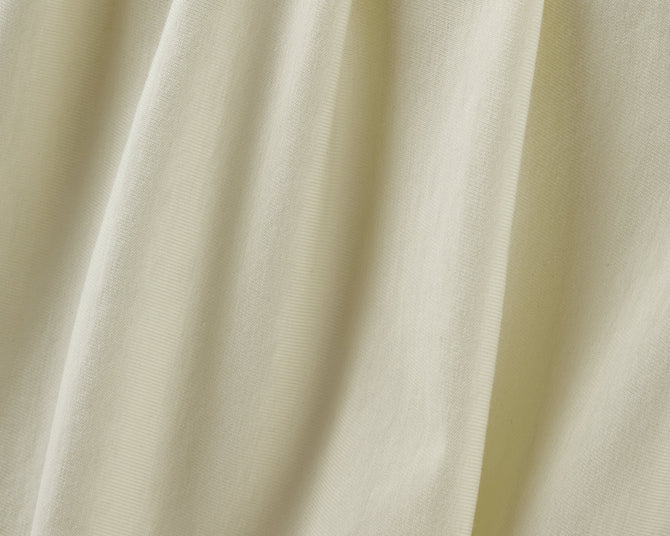
Fabric structure determines how effectively linen’s fiber-level properties are expressed.
Key construction factors include:
-
Yarn density and twist
-
Knit vs. woven structures
-
Fabric thickness and openness
More open constructions—especially engineered knit structures—enhance:
-
Air permeability
-
Moisture evaporation
-
Thermal comfort during movement
This is why linen knit fabrics are increasingly used in performance-oriented summer garments, as they combine cooling with flexibility and comfort.
How Does Linen Compare to Cotton and Synthetic Fibers?
Linen outperforms cotton and most synthetics in hot conditions due to faster moisture release and lower heat retention.
Compared to cotton:
-
Linen absorbs moisture faster
-
Linen dries more quickly
-
Cotton tends to retain moisture, increasing cling and warmth
Compared to synthetics:
-
Linen does not rely on chemical cooling finishes
-
Synthetic fibers often trap heat despite moisture-wicking claims
Linen’s cooling effect is inherent, not applied.
Why Is Linen’s Cooling Effect Relevant for Modern Fashion?
As consumers prioritize comfort, breathability, and natural performance, linen’s cooling properties align with long-term material demand.
Applications include:
-
Summer knitwear and T-shirts
-
Lightweight tailoring
-
Travel and resort apparel
-
Elevated loungewear
For premium and luxury brands, linen offers functional comfort without compromising on visual appeal, supporting both Quiet Luxury and sustainability narratives simultaneously.
Regen-tech Fashion — advancing textile performance through precision, comfort, and responsible innovation.
📩 Contact: Marketing@regentech-fashion.com
Article Keywords:
Linen Fiber, Linen Cooling Effect, Natural Cooling Fabrics, Moisture Wicking Fabrics, Fiber Performance Science, Summer Apparel Fabrics