
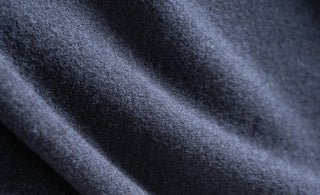
A black rib knit fabric may look rich in color and perfectly uniform when laid flat. However, when stretched, pale or even white lines can appear between the knitted loops, disrupting its clean, refined appearance.
Known in the textile industry as spandex grin-through, this phenomenon is an important consideration in stretch knit fabric development, particularly for fitted apparel and premium everyday essentials.
What Is Spandex Grin-Through?
Spandex grin-through occurs when elastane fibers that are normally concealed by the surrounding yarns become visible as the fabric stretches, creating a noticeable color contrast.
Conventional spandex has limited dyeability in many common dyeing processes. While cotton, viscose or other primary fibers may achieve a deep, saturated shade, the elastane can remain considerably lighter.
As the knitted loops open during stretching, the underlying elastane becomes more visible, creating pale lines and an uneven color appearance across the fabric surface.
This effect is particularly noticeable in dark shades such as black, navy, chocolate brown and burgundy.
Why Are Rib Knit Fabrics Prone to Spandex Grin-Through?
Rib knit fabrics offer excellent crosswise extensibility, allowing them to follow the body's contours comfortably. This makes them a popular choice for fitted apparel.
However, when a rib knit fabric is stretched crosswise, its ribs open up, increasing the spaces between knitted loops and potentially exposing the underlying elastane.
Several factors influence the degree of grin-through:
- Elastane dyeability
- Yarn coverage
- Elastane positioning within the knitted structure
- Knit construction and density
- Color contrast between elastane and surrounding fibers
- Direction and degree of fabric extension
Even fabrics with similar fiber compositions, weights and stretch properties can therefore deliver noticeably different visual results when worn.
Why Grin-Through Matters in Premium Everyday Apparel
In minimalist apparel, fabric quality is an essential part of the design.
Fitted T-shirts, ribbed tank tops, long-sleeve layering pieces and body-skimming dresses are constantly subjected to stretching as they follow body contours and accommodate everyday movement.
A chocolate brown ribbed top, for example, may appear rich and uniform when hanging on a rack. Once worn, however, pale lines may become visible across the chest, shoulders or elbows, compromising the depth of color and overall visual consistency.
For premium basics and elevated essentials, where material quality and understated design are central to the garment's appeal, visual consistency under stretch deserves attention alongside softness, elasticity and recovery.
How Dyeable Spandex Helps Reduce Grin-Through
Dyeable spandex offers a material-level solution to this challenge.
Compared with conventional spandex, dyeable elastane can achieve better coloration under compatible dyeing conditions, reducing the color difference between the elastane and surrounding fibers. This helps minimize the appearance of pale lines when the fabric stretches.
Fiber manufacturers such as Hyosung have developed specialized dyeable spandex technologies for different fiber blends and dye systems, enabling richer and more uniform color expression.
Elastane selection works in combination with yarn coverage, knit construction, fabric density and dyeing processes to achieve the intended fabric appearance.
Why Choose Dyeable Spandex Instead of Black Spandex?
Black spandex is typically pigmented during fiber production, giving the fiber an inherently black appearance. It can be an effective solution for reducing visible grin-through in black and selected dark-colored fabrics.
However, black spandex has a fixed color. In non-black shades such as burgundy, chocolate brown or navy, exposed black elastane may contrast with the surrounding yarns, locally darkening the fabric's appearance, compromising shade purity or introducing a new form of color contrast.
Dyeable spandex, by comparison, allows the elastane to achieve closer color compatibility with the surrounding fibers through an appropriate dyeing process.
| Feature | Black Spandex | Dyeable Spandex |
|---|---|---|
| Coloration method | Pigmented during fiber production | Colored through compatible dyeing processes |
| Color compatibility | Black and selected dark shades | A broader range of colors |
| Grin-through reduction | Reduces contrast between light elastane and dark yarns | Improves color matching between elastane and surrounding yarns |
| Shade consistency | Fixed black coloration may contrast with other shades | Supports closer alignment with the intended shade |
| Development flexibility | Suitable for specific color directions | Better suited to multi-color collections |
For apparel brands, a single fitted ribbed top may be developed in black, navy, charcoal, chocolate brown and burgundy, with additional seasonal colors introduced throughout the year.
Dyeable spandex provides greater flexibility across these colorways and allows a common elastane specification to support a broader range of color developments, where compatible with the fabric's dyeing requirements.
This flexibility is particularly valuable for brands that regularly expand their color palettes, introduce seasonal updates and develop recurring styles within their core collections.
Regentech's Approach to Stretch Knit Fabric Development
At Regentech Fashion, we consider visual consistency under stretch alongside softness, elasticity, recovery and garment appearance.
Selected fabrics within our collections incorporate dyeable spandex from Hyosung to help reduce grin-through and maintain a more refined appearance during everyday wear.
Mousse Collection
Combining acrylic, EcoCosy® viscose, combed cotton and elastane, our Mousse Collection offers a soft, lofty and refined tactile experience.
Selected classic rib and slub rib fabrics balance softness, comfortable stretch and visual consistency, making them suitable for fitted tops, lightweight layering pieces and premium everyday essentials.
Viscose-Cotton Collection
Combining the softness of viscose, the natural touch of combed cotton and the comfortable stretch of elastane, this collection offers versatile material options for ribbed tank tops, fitted T-shirts and other close-to-body garments.
Through coordinated fiber selection, knit construction and dyeing expertise, Regentech develops fabrics with consideration for how they look, feel and perform in their intended garment applications.
How to Evaluate Spandex Grin-Through Before Bulk Production
During fabric sourcing and garment development, apparel teams can perform several practical checks to assess the visual appearance of dark stretch knit fabrics.
1. Examine the Fabric Under Controlled Lighting
Place the fabric in a standard light booth under a consistent light source, such as D65 daylight, and examine its color depth and surface uniformity in the relaxed state.
When comparing different fabrics, maintain the same lighting, background and viewing angle.
2. Perform a Controlled Stretch Assessment
Mark a 10 cm section across the fabric width. Within the fabric's suitable extension range, stretch it to 13 cm and 15 cm, corresponding to 30% and 50% extension, respectively.
Observe whether pale lines appear between the knitted loops and how the fabric's color changes at different extension levels.
The extension level should reflect the fabric's stretch characteristics and the intended garment fit.
3. Simulate Body Contours
Wrap the fabric around a forearm or another curved surface to simulate the appearance of a fitted garment against the body.
This provides a practical indication of how the fabric may look across areas such as the shoulders, chest and elbows, where stretching commonly occurs during wear.
4. Distinguish Grin-Through from Transparency
Examine the stretched fabric against both black and white backgrounds. Observe the visibility of elastane and whether the background can be seen through the knitted structure.
Spandex grin-through relates to exposed elastane and color contrast, while transparency under stretch relates to the fabric's coverage and the openings formed between knitted loops.
These two characteristics should be evaluated separately.
5. Observe the Fabric After Repeated Stretching
Stretch and release the fabric several times within its suitable extension range. Examine whether the surface returns to its original appearance and whether localized distortion or persistent pale lines remain.
For formal bulk production quality assessment, apparel brands and fabric suppliers can establish agreed extension levels, visual acceptance criteria and appropriate stretch and recovery testing procedures based on the intended garment application.
From Static Appearance to Dynamic Garment Quality
The value of a fabric extends beyond its color, hand feel and weight on a sample hanger. It also lies in how these qualities translate into the finished garment.
For stretch knit fabrics, color consistency under extension reflects the combined influence of fiber selection, knit construction and dyeing expertise. It is a detail worth considering when developing premium everyday apparel.
Explore Regentech Fashion's Mousse Collection and EcoCosy® Viscose-Cotton for your next apparel development.


