
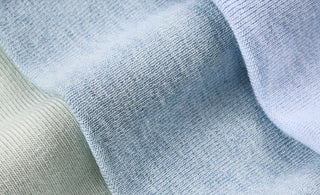
Acrylic vs. Viscose: Differences in Warmth, Softness and Breathability
A next-to-skin garment with a soft, wool-like touch requires more than softness alone. It also needs comfortable skin contact, appropriate stretch, and sufficient structure to maintain its intended silhouette. Achieving all these qualities through a single fiber can be challenging.
Acrylic and viscose are two textile fibers with distinct yet complementary characteristics. Acrylic is valued for its lightweight loft and wool-like warmth, while viscose offers moisture absorption, a smooth hand feel, and fluid drape.
Understanding these differences helps apparel brands make informed material choices. It also explains why combining these fibers opens up new possibilities in modern knit fabric development.
1. What Is Acrylic? Lightweight Loft and Wool-Like Softness
Acrylic is a synthetic fiber primarily made from acrylonitrile-based polymers. Its ability to create a soft, bulky, wool-like texture has made it a widely used material in warmth-oriented apparel.
One of acrylic's most valuable physical characteristics in fabric development is its relatively low fiber density.
According to Textile Fibers, published by Cotton Incorporated, the typical densities of common textile fibers are as follows:
| Fiber | Density (g/cm³) |
|---|---|
| Acrylic | 1.18 |
| Wool | 1.30 |
| Polyester | 1.38 |
| Viscose Rayon | 1.50 |
| Cotton | 1.54 |
Source: Cotton Incorporated, Textile Fibers, 2013, p. 19.
Acrylic has approximately 21% lower fiber density than viscose. At an equivalent weight, acrylic fibers occupy a greater solid volume.
Combined with fiber crimp, yarn engineering, and high-bulk spinning techniques, this characteristic makes acrylic particularly suitable for developing fabrics with a full, lofty hand feel without excessive weight.
Lofty yarns and fabric constructions can retain relatively still air, reducing heat transfer and contributing to thermal insulation. This is one reason acrylic remains a valuable material for autumn and winter apparel and comfort-oriented knit fabrics.
Modern acrylic applications extend well beyond traditional heavy sweaters. Through careful fiber selection, yarn design, and knit construction, acrylic can also be used to develop lightweight, refined fabrics for next-to-skin garments.
However, acrylic has relatively low moisture absorption. Static buildup and pilling are also considerations that need to be addressed through fiber selection, yarn construction, and finishing.
2. What Is Viscose? Softness, Moisture Absorption and Natural Drape
Viscose, a type of rayon often labeled simply as rayon in the US market, is a regenerated cellulose fiber typically derived from wood pulp.
Compared with acrylic, viscose has a significantly higher capacity to absorb moisture.
The Royal Society of Chemistry's publication The Chemistry of Textile Fibres provides reference values for the moisture regain of common textile fibers at 20°C and 65% relative humidity.
| Fiber | Moisture Regain |
|---|---|
| Wool | 14–18% |
| Viscose | 12–14% |
| Cotton | 7–8% |
| Acrylic | 1–2% |
| Polyester | 0.4% |
Source: Royal Society of Chemistry, The Chemistry of Textile Fibres, Table 1.7.
Moisture regain measures the amount of moisture absorbed by a fiber relative to its dry weight.
Under these conditions, 100 grams of dry viscose fiber can absorb approximately 12–14 grams of moisture at equilibrium, compared with approximately 1–2 grams for the same dry weight of acrylic.
This difference makes viscose a valuable component in fabrics designed for next-to-skin comfort.
Viscose also offers a smooth, soft hand feel and naturally fluid drape, making it suitable for T-shirts, fitted tops, dresses, loungewear, and lightweight layering pieces.
Conventional viscose, however, has relatively limited wet strength and elastic recovery. When developing viscose-based knit fabrics, considerations such as dimensional stability, shape retention, and long-term wear performance remain important.
3. Acrylic vs. Viscose: Key Differences
| Property | Acrylic | Viscose Rayon |
|---|---|---|
| Fiber classification | Synthetic fiber | Regenerated cellulose fiber |
| Raw material | Acrylonitrile-based polymers | Cellulose, typically from wood pulp |
| Typical fiber density | 1.18 g/cm³ | 1.50 g/cm³ |
| Moisture regain | 1–2% | 12–14% |
| Hand feel | Soft, lofty, wool-like | Smooth, soft, refined |
| Thermal characteristics | Well suited to lightweight, lofty insulation | Warmth can be engineered through blending and construction |
| Drape | Generally fuller and more voluminous | Naturally fluid and flowing |
| Elastic recovery | Generally good | Relatively limited in conventional viscose |
| Typical applications | Warm layers and cozy apparel | Next-to-skin tops, everyday apparel, draped garments |
Values represent typical fiber-level properties. Finished fabric performance varies with fiber grade, yarn construction, knit structure, and finishing.
Is Acrylic Warmer Than Viscose?
Acrylic is generally better suited to fabrics designed around loft and warmth, particularly when a lightweight, wool-like hand feel is desired.
However, the actual thermal insulation of a fabric depends on several factors, including yarn bulk, fabric thickness, knit density, trapped air, and surface finishing.
Two fabrics with identical fiber compositions can therefore exhibit substantially different thermal resistance.
Is Viscose More Breathable Than Acrylic?
Viscose has a clear advantage in moisture absorption. However, moisture absorption and air permeability are different properties.
Moisture absorption describes a fiber's ability to take up moisture, while air permeability describes how readily air passes through a fabric. The latter is strongly influenced by fabric construction, porosity, and knit density.
For next-to-skin apparel, overall wearing comfort depends on the interaction between moisture absorption, air permeability, moisture transport, drying behavior, and tactile properties.
4. Why Blend Acrylic and Viscose Together?
The physical differences between acrylic and viscose are precisely what make them valuable blending partners.
Acrylic contributes loft, fullness, and wool-like warmth. Viscose increases the moisture absorption potential of the blend while introducing a smoother touch and more fluid drape.
Consider an autumn fitted long-sleeve top. A designer may want the garment to feel soft and warm without making it excessively bulky.
For an everyday layering T-shirt, the objective may be to achieve a refined tactile character while maintaining comfortable next-to-skin wear.
An acrylic-viscose blend allows fabric developers to explore a balance between lightweight warmth, loft, moisture absorption, softness, and drape.
Rather than relying on the characteristics of a single fiber, developers can combine complementary properties to create fabrics suited to specific garment requirements.
This material approach is particularly relevant to fitted tops, elevated basics, and everyday layering apparel.
5. Why Add Cotton to an Acrylic-Viscose Blend?
Softness is not the only objective in apparel development.
A fabric with excessive drape and insufficient body may lack the structure required for certain garment silhouettes. Fitted tops, ribbed garments, and more defined everyday essentials often require a balance between softness and structural support.
Adding combed cotton introduces another dimension to acrylic-viscose fabric development.
Cotton offers a familiar, natural hand feel, with moisture regain values between those of acrylic and viscose. Combined with appropriate yarn engineering and knit construction, cotton can also contribute to a more balanced fabric body.
This is the foundation of our ACR (Acrylic / Cotton / Rayon) blend system at Regen-tech Fashion.
Each of the three primary fibers plays a distinct role:
- Acrylic: Lightweight loft, warmth, and a wool-like hand feel.
- Cotton: Natural tactile character, fabric body, and structural balance.
- Rayon / Viscose: Softness, moisture absorption, and fluid drape.
One example is our Mousse 6327 fabric, a 230 GSM stretch rib developed using this material approach.
| Fabric Specification | Mousse 6327 |
|---|---|
| Knit structure | 1×1 Stretch Rib |
| Viscose | 37.6% |
| Cotton | 28.3% |
| Acrylic | 28.3% |
| Spandex | 5.8% |
| Fabric weight | 230 GSM |
The three primary fibers establish the fabric's tactile character, while spandex and the rib construction provide the stretch and close-to-body fit required for fitted apparel.
By adjusting fiber composition, yarn construction, knitting parameters, and finishing, the same blend system can be developed into fabrics with different weights, textures, hand feels, and silhouette characteristics.
6. Beyond Fiber Blending: Engineering Softness, Stability and Appearance
Combining three complementary fibers is only the starting point of fabric development.
For apparel brands producing at scale, the real challenge lies in translating a desirable hand feel into a commercially viable fabric with consistent quality.
Throughout the development of our Mousse collection, Regen-tech Fashion has focused on several key material and manufacturing considerations.
Balancing Softness and Shape Retention
A soft, lofty knit fabric must also meet the structural requirements of the intended garment.
We use double-combed cotton to further remove short fibers and impurities, improving fiber uniformity and providing a foundation for refined yarns and cleaner fabric surfaces.
Through different rib constructions, knitting densities, and stretch configurations, Mousse fabrics can range from soft, close-to-body materials to more compact fabrics with greater structural support.
This allows designers to select fabrics according to the desired fit and silhouette rather than softness alone.
Fiber Quality and Surface Appearance
Our Mousse collection incorporates EcoCosy® viscose from Sateri.
According to Sateri, EcoCosy® textile fibers are developed with an emphasis on fiber tenacity, pilling resistance, and processing consistency. These characteristics provide a material foundation for smooth fabric surfaces, refined softness, and rich color development.
By combining selected acrylic fibers, EcoCosy® viscose, and double-combed cotton, we establish the tactile foundation of the fabric at the raw material stage before developing different surface characteristics through knitting and finishing.
Reducing Spandex Grin-Through in Dark Stretch Fabrics
When dark stretch knit fabrics are stretched, lighter-colored lines or localized whitening may become visible. One common cause is a phenomenon known as spandex grin-through.
As the knit loops deform under tension, elastic filaments that were previously concealed within the fabric structure may become exposed. If these filaments differ significantly in color from the surrounding fibers, they can disrupt the visual uniformity of the fabric.
In selected Mousse classic rib and slub-textured fabrics, we use dyeable spandex from Hyosung to reduce grin-through caused by differences in fiber coloration.
This helps achieve a more consistent color appearance when dark fabrics are stretched.
For black, deep brown, and other dark-colored fitted garments, this technical detail is particularly valuable in maintaining a refined visual appearance during wear.
Controlling Shrinkage and Fabric Weight Consistency
Multi-fiber stretch knit fabrics involve different fiber properties, dimensional changes during dyeing and finishing, and fabric relaxation after processing.
Variations in shrinkage or fabric weight can affect finished garment dimensions, fabric consumption, and manufacturing costs.
In the production of our Mousse classic rib and slub-textured fabrics, we apply targeted process controls to improve shrinkage and fabric weight consistency.
These measures help garment manufacturers achieve more predictable fabric consumption, optimize fabric utilization, and reduce production waste associated with dimensional and weight variation.
Together, these manufacturing considerations determine whether a promising fiber blend can become a reliable fabric for commercial apparel production.
7. Mousse: One Blend System, Multiple Knit Fabric Directions
Mousse is a collection of soft knit fabrics developed by Regen-tech Fashion around our ACR blend system.
Building on the core combination of acrylic, viscose, and combed cotton, we have expanded the collection through different yarn designs, knit structures, fabric weights, surface textures, and Merino wool blends.
| Fabric Direction | Reference Weight (GSM) | Fabric Characteristics | Garment Applications |
|---|---|---|---|
| Classic Rib | 230–260 | Soft, lofty, refined rib texture | Fitted tops, long-sleeve T-shirts, everyday essentials |
| Slub Knit | Product-specific | Natural slub texture and subtle visual depth | Fashion basics, casual tops |
| Compact Stretch Rib | 260–300 | Compact structure, stretch, and silhouette support | Fitted tops, dresses, matching sets |
| Merino Wool Blend | 230–260 | Richer wool-like texture and enhanced warmth | Premium next-to-skin apparel, seasonal essentials |
| Double-Sided Brushed Knit | Product-specific | Fine, dense fleece surface with a full, soft hand feel | Autumn/winter layering, loungewear sets, midlayers |
Weights are reference specifications for representative fabrics. Exact composition, fabric weight, and availability vary by article.
For apparel brands, a mature blend system can serve as the foundation for multiple garment collections.
From lightweight transitional-season tops to cozy autumn and winter essentials, and from soft fitted garments to more structured silhouettes, Mousse offers a range of material directions through continuous development in fiber selection, knit construction, and tactile properties.
This collection-based approach allows brands to explore different garment categories, seasons, and product positioning while working within a consistent material concept.
8. Acrylic or Viscose: Which Fabric Is Better?
The answer depends on the intended garment and the desired wearing experience.
Acrylic offers particular value when developing lightweight, lofty fabrics with wool-like warmth. Viscose brings advantages in moisture absorption, smoothness, and natural drape.
For knit garments that require a balance of softness, warmth, next-to-skin comfort, and silhouette support, blending acrylic, viscose, and combed cotton provides a versatile material development approach.
Softness is more than a fiber property. It is the outcome of material selection, yarn engineering, knit construction, and finishing working together.
Explore the Regen-tech Mousse Fabric Collection to discover soft blend knit fabrics developed for contemporary next-to-skin apparel, elevated basics, and everyday layering.
Contact our team for fabric samples, detailed technical specifications, and material recommendations for your next collection.
References
- Cotton Incorporated (2013). Textile Fibers — Comparison of Fiber Properties, p. 19.
- Royal Society of Chemistry. The Chemistry of Textile Fibres — The Scope of Textile Fibres, Table 1.7.
- Federal Trade Commission. Threading Your Way Through the Labeling Requirements Under the Textile and Wool Acts.
- Sateri. EcoCosy® Textile Fibres.
- Hyosung TNC. High-Performance, Multi-Function CREORA Spandex.


